

Hah Taew Sak Yant Meaning (Five Lines Sak Yant)
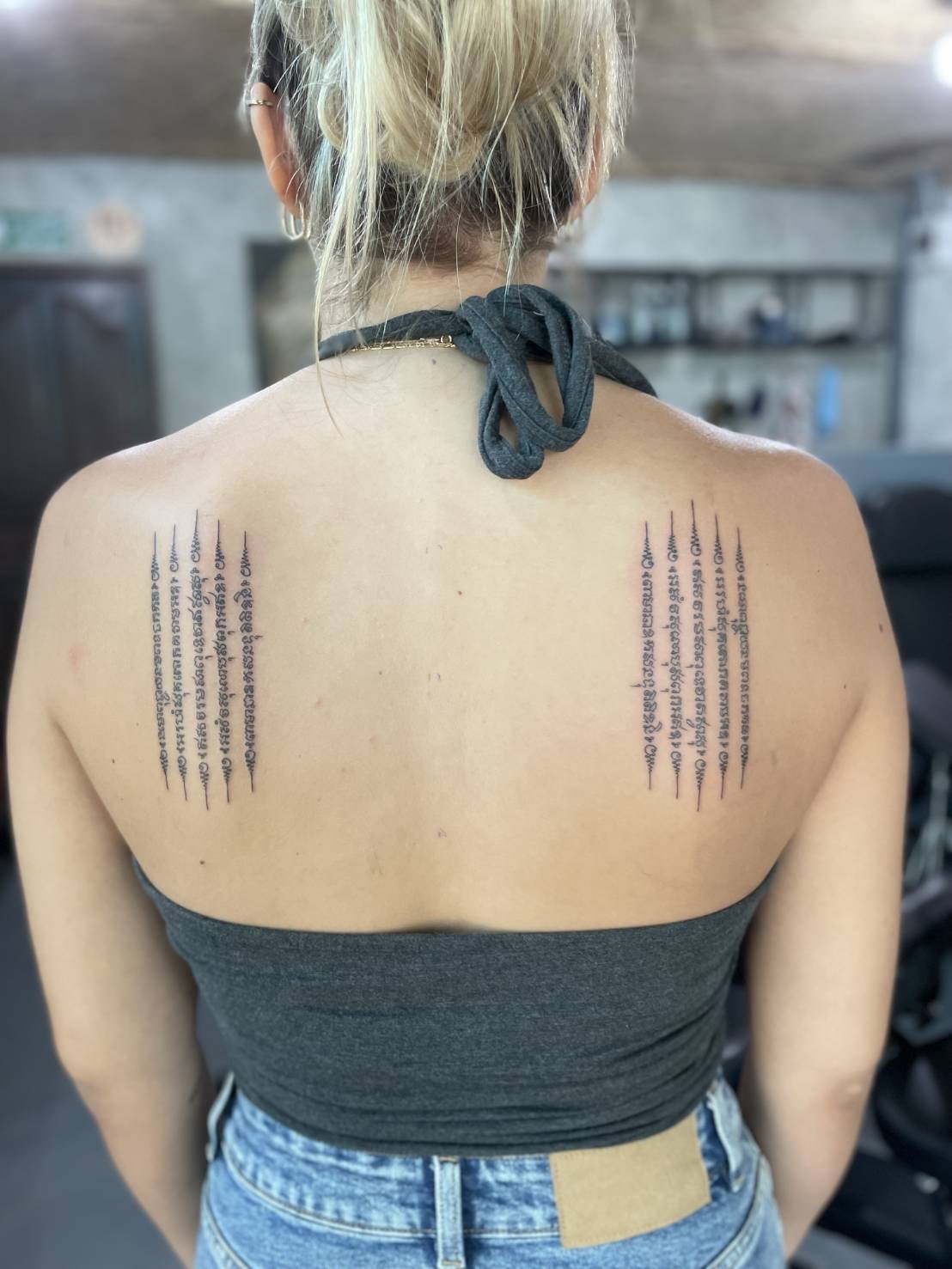
Hah Taew (ห้าแถว), also known as the Five Lines Sak Yant, is one of the most recognisable and widely respected traditional Sak Yant designs in Thailand. Each of the five vertical lines carries a specific meaning, working together as a complete system of protection, guidance, and spiritual balance.
This Sak Yant is valued for its clarity, simplicity, and depth of meaning, making it suitable for both first-time Sak Yant wearers and those building a larger traditional composition.
Meaning & Symbolism
Hah Taew is made up of five sacred lines, each traditionally written in ancient script and charged with intention. While interpretations can vary slightly depending on lineage and Ajarn, the core meanings remain consistent.
Line 1
Traditionally associated with protection from unjust punishment, negative actions, and harmful energies directed toward the wearer.
Line 2
Represents protection against misfortune, bad karma, and negative influences caused by others.
Line 3
Linked to protection from curses, ill will, and unseen spiritual harm.
Line 4
Associated with success, good luck, and positive outcomes in work, travel, and life paths.
Line 5
Represents charm, attraction, and personal magnetism — often connected to communication, relationships, and social presence.
Together, the five lines work as a balanced system rather than separate elements, which is why Hah Taew is traditionally kept clean, aligned, and uncluttered.
Who This Sak Yant Is Traditionally For
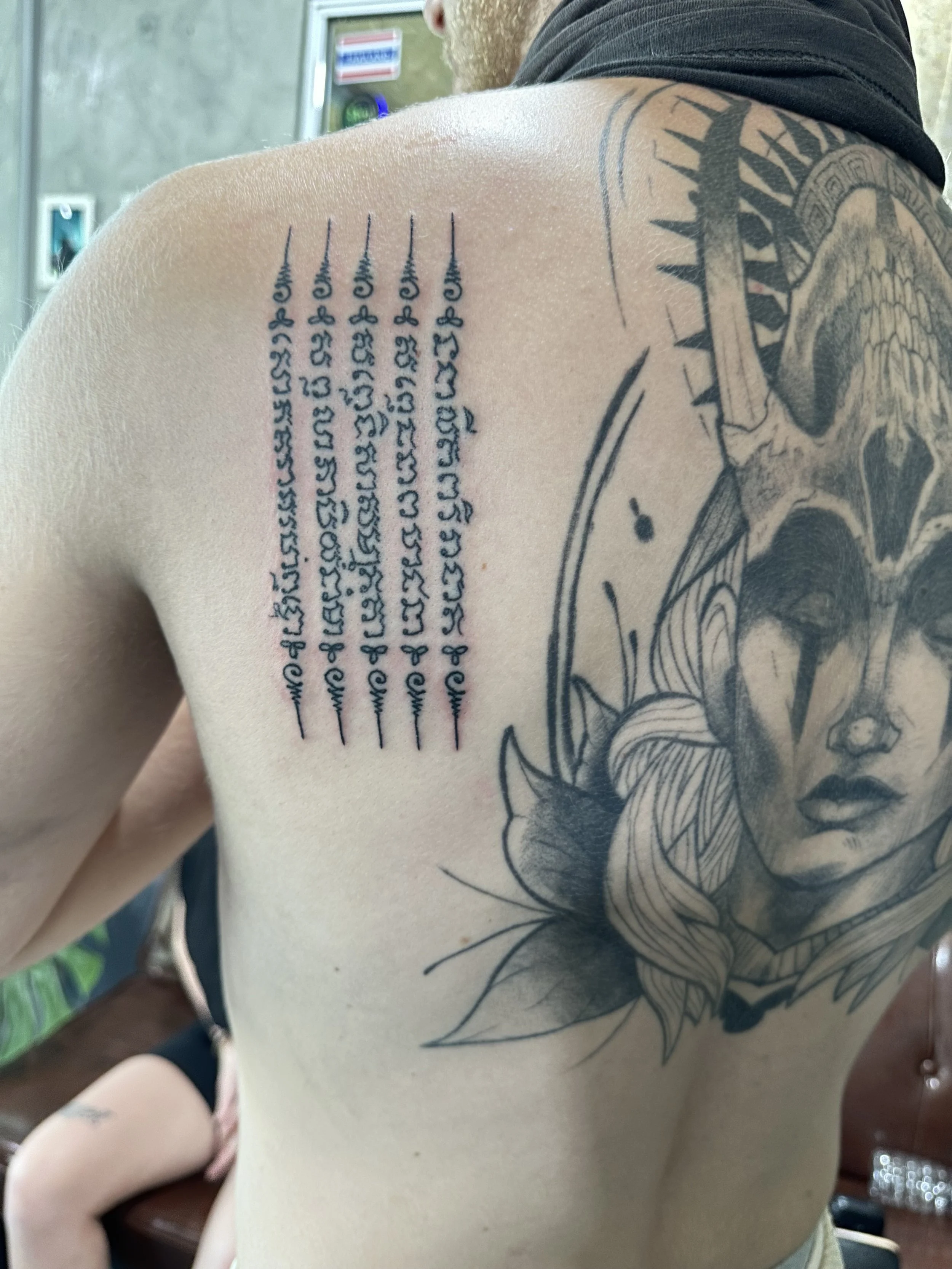
Traditionally, Hah Taew was used as a general protective Sak Yant, suitable for people from many walks of life. It was not limited to fighters or warriors, but also worn by travellers, workers, and those seeking stability and guidance.
Today, Hah Taew is commonly chosen by:
• People receiving their first Sak Yant
• Those seeking protection without an aggressive design
• Travellers and long-term residents in Thailand
• Individuals drawn to spiritual balance rather than dominance
Can women get Hah Taew?
Yes. Hah Taew is one of the most commonly chosen Sak Yant designs for women. The meaning is not gender-specific, and placement is adjusted respectfully according to tradition.
Placement Rules & Body Areas
Hah Taew is traditionally placed on the upper back or shoulder blade area, where the lines can remain straight, aligned, and uninterrupted.
Common traditional considerations include:
• Placement above the waist
• Respecting symmetry and body flow
• Allowing space for future Sak Yant, such as Gao Yord or a full back composition
Bamboo vs Machine Application
Traditionally, Hah Taew is applied using the bamboo (poke and stick) method, which has been used for centuries in Sak Yant practice.
In more modern times, machine tattooing may be used depending on the design, placement, and client preference. The application method is usually discussed prior to the session.
Bamboo Method
• Hand-tapped using a bamboo rod
• Slower, more controlled application
• Traditionally associated with ritual and intention
• Heals cleanly with proper care
Machine Method
• Faster application
• More familiar to modern tattoo clients
• Often chosen for stylistic rather than traditional reasons
Cultural & Spiritual Notes
Sak Yant is deeply connected to Thai spiritual and cultural beliefs. Traditionally, Sak Yant is not only a tattoo, but a symbol of commitment to personal conduct, respect, and mindfulness.
Some traditions include:
• Receiving a blessing or activation
• Following personal rules or principles associated with the Sak Yant
• Treating the tattoo with respect rather than as decoration alone
Different Ajarns and traditions may emphasise different practices, which is why guidance is important.
Is This Sak Yant Right for You?
Hah Taew may be right for you if:
• You are new to Sak Yant
• You want protection without an aggressive image
• You value meaning and balance over size
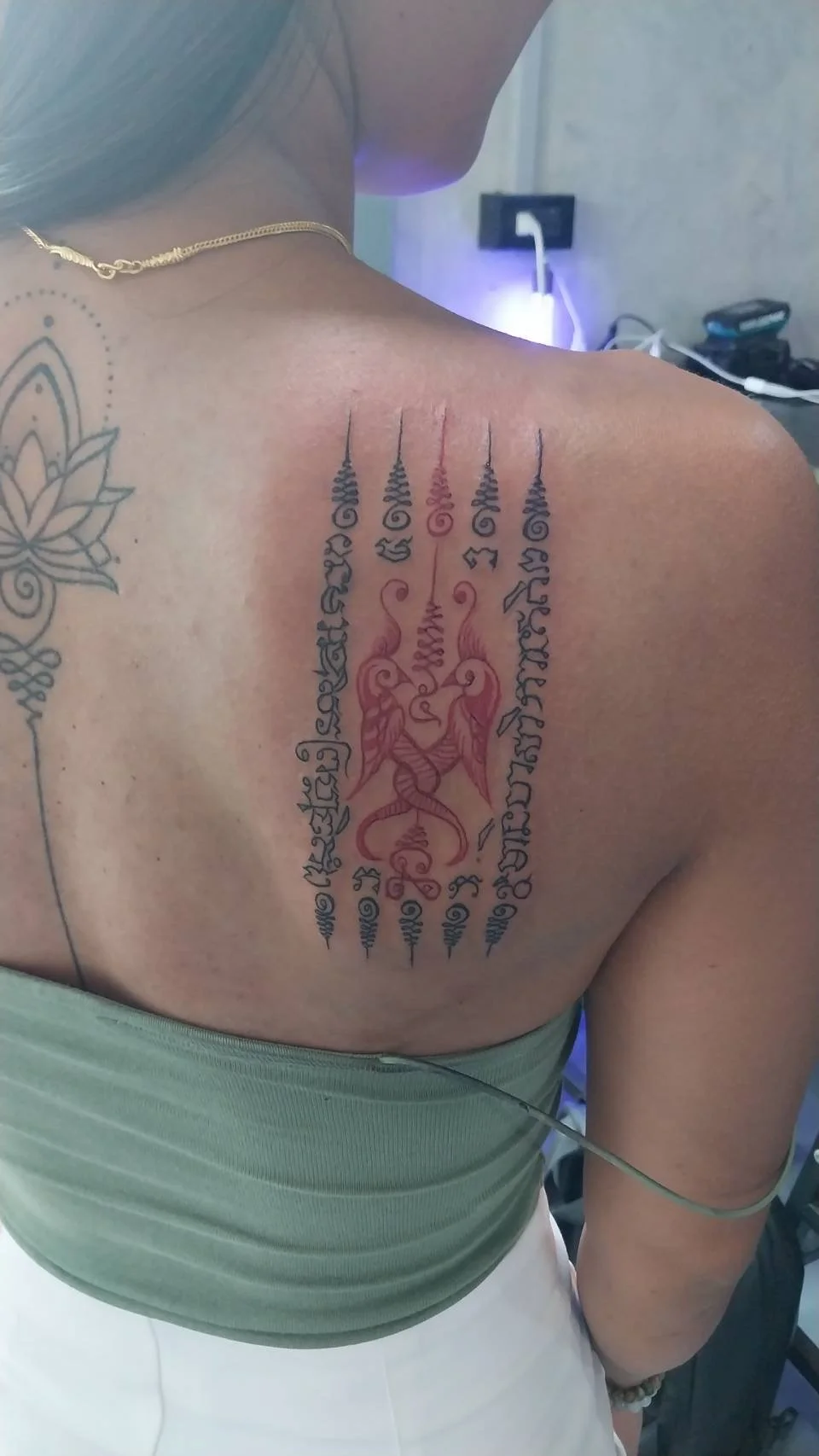
• You may plan to build toward a larger Sak Yant composition in the future
It may not be the best choice if:
• You are seeking a dominant or warrior-focused design
• You want a large, highly detailed standalone piece
If you are considering a Hah Tew (Five Lines) Sak Yant tattoo in Phuket, we recommend a consultation to discuss meaning, placement, and traditional considerations before proceeding.
Hah Taew FAQ
-
Hah Taew is spiritual and cultural rather than strictly religious. While it draws from Buddhist and traditional beliefs, it is worn by people of many backgrounds and belief systems.
-
Traditionally, Sak Yant — including Hah Taew — is placed above the waist out of respect for spiritual hierarchy. While modern adaptations exist, traditional placement remains the most widely accepted.
-
Traditionally, Sak Yant is applied with intention and may be accompanied by a blessing or ritual. Practices vary depending on tradition, Ajarn, and studio, but intention is considered an important element.
-
Traditionally, Hah Taew is applied using the bamboo (poke and stick) method. Many people choose bamboo because of its cultural significance, control, and historical connection to Sak Yant practice.
-
Hah Taew is relatively quick compared to larger Sak Yant designs. Application time depends on the method and individual factors, but it is often completed in a single session of two hours.
-
Yes. Hah Taew is often used as a starting point and can be incorporated into larger compositions, including full back Sak Yant designs.
