
Suea Koo (Twin Tigers) Sak Yant Meaning
The Suea Koo (Twin Tigers) Sak Yant is one of the most powerful and common animal Sak Yants in traditional Thai tattooing. The Twin Tigers Sak Yant is known for symbolising authority, courage, protection, and leadership. This design has long been associated with Muay Thai fighters, Soldiers and those seeking strength and command in their personal or professional lives.
Featuring Two Tigers typically facing each other in perfect symmetry/balance, the Suea Koo Sak Yant represents controlled power rather than needless aggression — strength guided by discipline, and a new spiritual intention for the wearer.
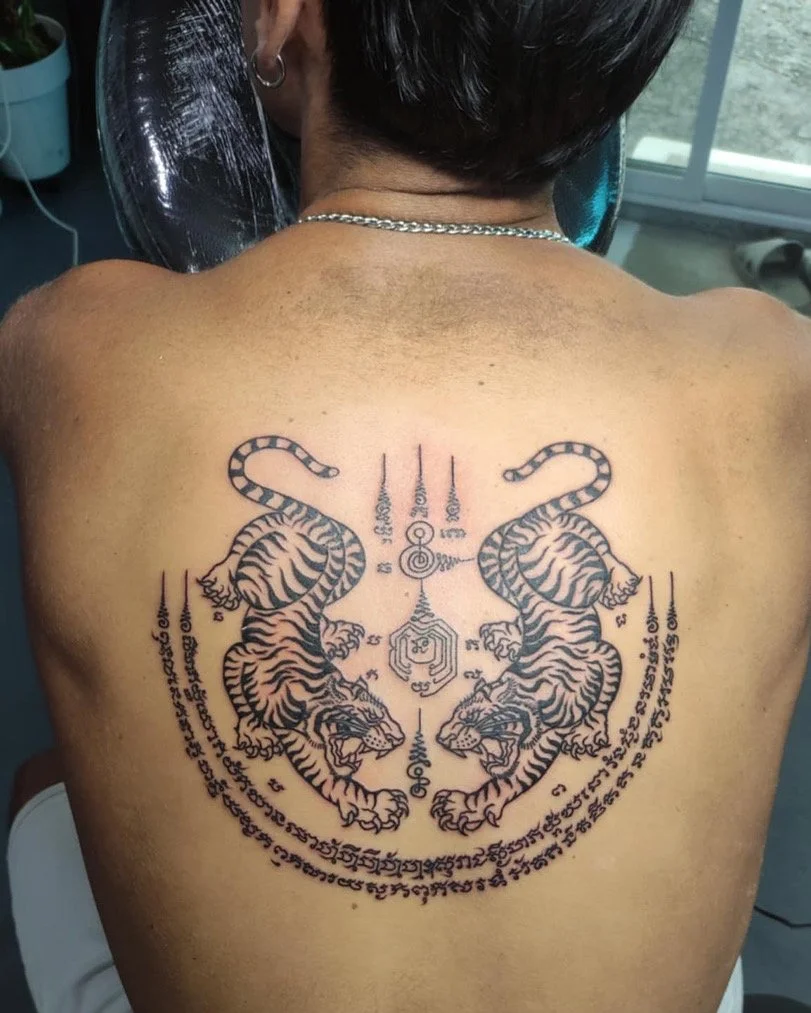
A traditional hand-poked Suea Koo (Twin Tigers) Sak Yant symbolising authority, balance, power, and protection.
What is the meaning of the Suea Koo (Twin Tigers Sak Yant)
In Thai, the word “Suea” means Tiger, and “Koo” means pair (or twinned). Together, Suea Koo refers to two tigers working in balance, symbolising dual strength — physical and mental and authority and restraint, courage and wisdom.
In Sak Yant tradition, the tiger is a symbol of dominance, fearlessness, and natural leadership. When tattooed as a pair (or twinned together), the meaning expands beyond raw power to include self-control, balance, and awareness.
Core Meanings of the Twin Tigers Sak Yant
While the Twin Tigers are often described as representing “doubled power,” traditional interpretation focuses more on balanced authority and controlled strength, rather than aggression. This balance is one of the reasons the Suea Koo is favoured in both physical and professional environments.
Maha Amnaj - Authority and Leadership
The Suea Koo is strongly associated with a term called Maha Amnaj — Authority, command, and influence. It’s traditionally believed to enhance a person’s presence, helping them to be respected, listened to, and taken seriously in leadership roles. A term often associated with Maha Amnaj is authority over your subordinates.
Courage and Fearlessness
The Tiger is revered as a fearless apex predator. This Sak Yant is chosen by those who wish to strengthen their courage, overcome fear, and face their challenges in life directly — whether in competition, sports, work, or their personal life.
Protection and Personal Power
The Suea Koo is also believed to offer spiritual protection, helping shield the wearer from harm, other people’s bad intentions, and negative influences. Rather than just passive protection, it represents a more active and alert defence, combined with increased power.
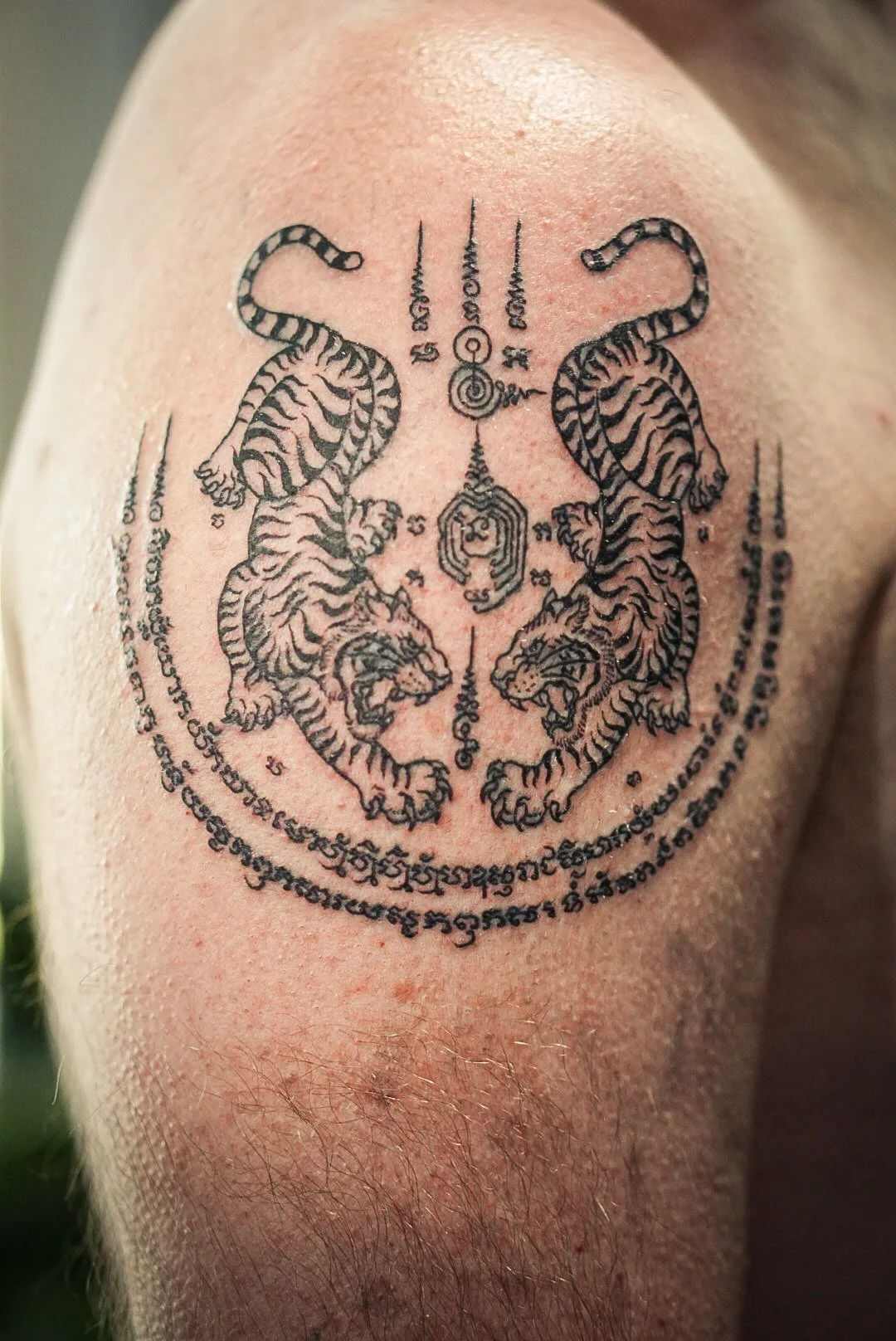
Two Tigers Sak Yant placed on the upper arm, by Ajarn Ben Fighters INK.
Who traditionally chooses the Suea Koo Sak Yant?
Historically, the Twin Tigers Sak Yant has been associated with Muay Thai fighters, warriors, soldiers, and police. In modern times, it is more commonly chosen by Muay Thai fighters, martial artists, and those who live a more disciplined, physically demanding life.
Beyond fighting and martial arts, the Suea Koo is popular with business owners, leaders, and individuals seeking more confidence, authority, and self-belief — people who want to stand firm, make decisions, and lead others.
Suea Koo Sak Yant at Fighters INK
At Fighters INK, the Suea Koo is one of the most requested Sak Yants paticularily by Muay Thai fighters (Nak Muay) and other clients seeking authority, confidence, and controlled personal strength rather than aggression.
Based on our experience tattooing the Suea Koo Sak Yants in Phuket, this design is most commonly chosen by those going through periods of transition, such as changes in career, leadership responsibilities, or a renewed focus on discipline and personal direction.
While it remains popular with Muay Thai fighters and other combat sports athletes, many business owners and other individuals in leadership roles are drawn to the balance, symbolism, and strength represented by the Twin Tigers.
Careful attention must be paid to the size, symmetry, and placement to ensure the design represents traditional principles while also fitting the wearer’s body structure to look beautiful. Each Suea Koo is discussed and planned in advance to ensure the final result aligns with the cultural tradition of Thailand and desire of the individual recieving the Sak Yant.
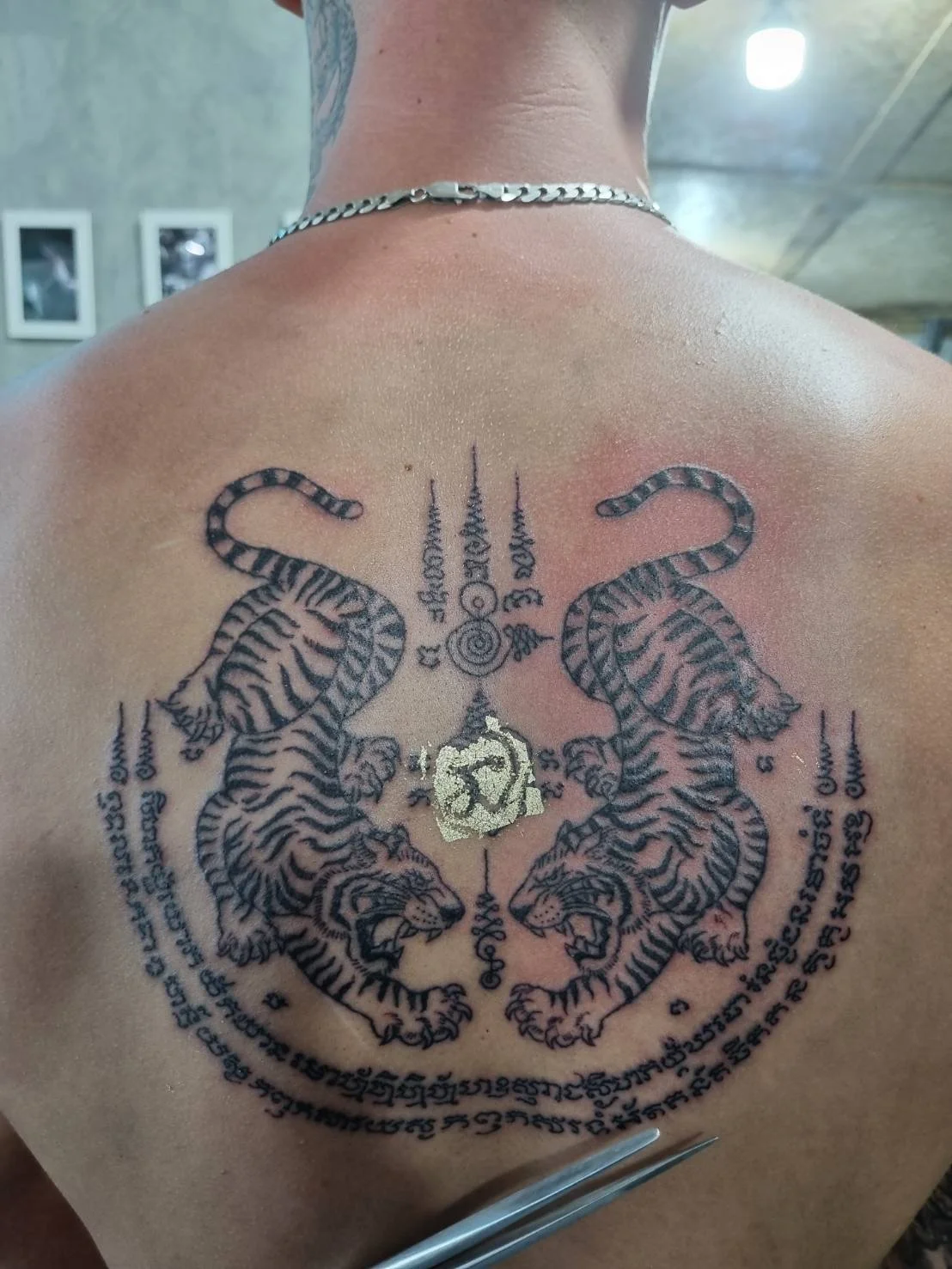
Suea Koo (Two Tigers) Sak Yant by Ajarn Dam Fighters INK
Placement of the Suea Koo Sak Yant
Traditionally, the Suea is placed on areas of the body associated with protection and strength and balance, such as the upper back, between the shoulder blades, or the chest. In modern times, many fighters are choosing to place the Suea Koo on the upper arm area to increase the power of their punches.
The Symmetry of the Two Tiger is very important. The Two Tigers need to be mirrored to maintain energetic balance, reinforcing the idea of controlled power rather than power.
Spiritual benefits of the Suea Koo Sak Yant
The Suea Koo (Twin Tigers) Sak Yant is believed to be one of the most powerful Animal Yants. It is believed to provide powerful spiritual benefits connected to strength, authority, protection, and confidence. Traditionally, the twin tigers represent dominance over rivals, courage in battle, and the ability to command respect from others.
This Sak Yant is often chosen by people who want to increase their presence in challenging environments, including fighters, athletes, business owners, and other people in leadership roles. It is also believed to offer spiritual protection, helping the wearer remain calm, focused, and resilient under pressure.
Traditional Blessing and Activation
In Thai Sak Yant tradition, receiving the tattoo is only the first step — the next part is the blessing or activation. Traditionally, this is performed by the Ajarn (Spiritual Master) or a Monk. They will perform the blessing ceremony and activate the powers and intentions of the Sak Yant.
The blessing usually occurs immediately after the tattoo, or in some cases at a local temple where the monk will perform the Sak Yant rituals. At Fighters INK, you will have the option to choose to receive your blessing at the studio in the temple room from an experienced Ajarn, or we can accompany you to a local Wat (Temple) for a traditional monk blessing ceremony.
Many people find that the act of the blessing, in addition to the design itself, reinforces spiritual guidance, increased confidence, and meaning in their everyday lives.
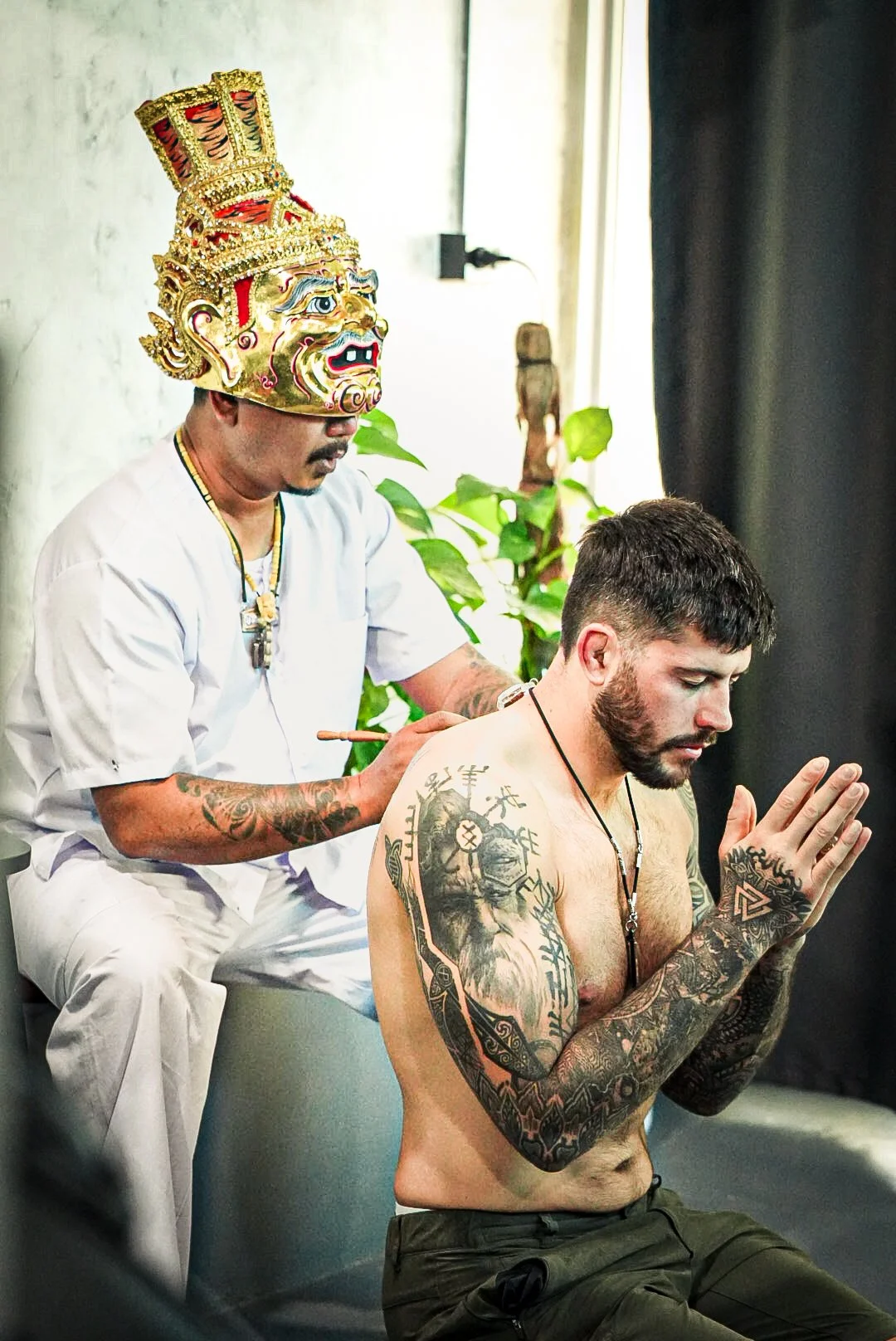
Traditional Sak Yant Blessing Performed by Ajarn Dam Fighters INK
Machine vs Bamboo Sak Yant
Traditionally, a Sak Yant is performed using the poke-and-stick method (commonly known as the bamboo method) by a qualified Ajarn, often within a temple setting. This practice has deep cultural and spiritual roots in Thailand and has been passed down through generations.
In modern times, however, this traditional approach has become less common for several practical reasons.
Hygiene considerations play a significant role. Temples are not tattoo studios, and they do not always meet the hygiene standards expected by modern clients. As awareness of health and safety has increased, many people now prefer controlled studio environments that follow strict sterilization procedures.
Artistic quality is another factor. While some monks and Ajarns produce exceptional work, others focus primarily on the spiritual aspect rather than aesthetics. Today, many clients prioritize receiving a visually refined and well-balanced tattoo, choosing Ajarns or experienced tattoo artists who can deliver both strong symbolism and high artistic quality. In many cases, the tattoo is then blessed separately at a temple.
Accessibility and convenience have also changed the landscape. Tattoo studios are easy to find and book through websites and social media platforms such as Facebook and Instagram, making the process far more accessible than traditional temple visits.
Modern tattoo machines also offer practical advantages. Machine tattoos are generally faster to complete, more consistent in line work, and often result in a cleaner, more detailed appearance—especially for larger or symmetrical designs.
Another important consideration is the physical strain involved in traditional hand-poked Sak Yant tattooing. The poke-and-stick method requires sustained posture, repetitive movement, and long sessions, which can lead to back, shoulder, and joint pain over many years. As a result, some experienced Ajarns adapt their practice and choose to use tattoo machines as a way to continue their work while protecting their health. This allows them to preserve their knowledge and continue performing Sak Yant without the physical toll that traditional methods can place on the body.
For these reasons, it has become increasingly common for both Thai people and foreigners to adapt tradition to modern life. While the spiritual meaning of Sak Yant remains deeply respected, many now choose a more flexible approach that balances tradition, hygiene, artistry, and practicality.
Common Misconceptions About the Suea Koo Sak Yant
Is the Suea Koo the most powerful Sak Yant?
There is no single “most powerful” Sak Yant. The effectiveness of a Sak Yant depends on suitability, intention, and personal conduct rather than hierarchy. The Suea Koo is considered highly respected due to its association with authority, protection, and balanced strength, but its power lies in how well it aligns with the individual receiving it.
Is the Suea Koo Sak Yant only for fighters or soldiers?
No. While the Twin Tigers are popular among Muay Thai fighters and those in physically demanding or high-risk professions, the Suea Koo is also commonly chosen by business owners, managers, and individuals in leadership roles. Its symbolism relates to presence, confidence, and control, not aggression.
Do the tigers need to face a specific direction?
Yes. In traditional designs, the two tigers must face each other symmetrically. This balance is essential to the meaning of the yant, representing controlled and harmonious strength. Incorrect orientation can compromise the symbolic intent of the design.
Does breaking Sak Yant rules remove its power?
Sak Yant rules are traditionally intended as guidelines for discipline and respectful conduct rather than rigid prohibitions. The significance of these rules varies depending on lineage and interpretation, and they are best understood as reminders of personal responsibility rather than fear-based restrictions.