
Gecko Sak Yant Meaning (Jingjok Keow) | Phuket
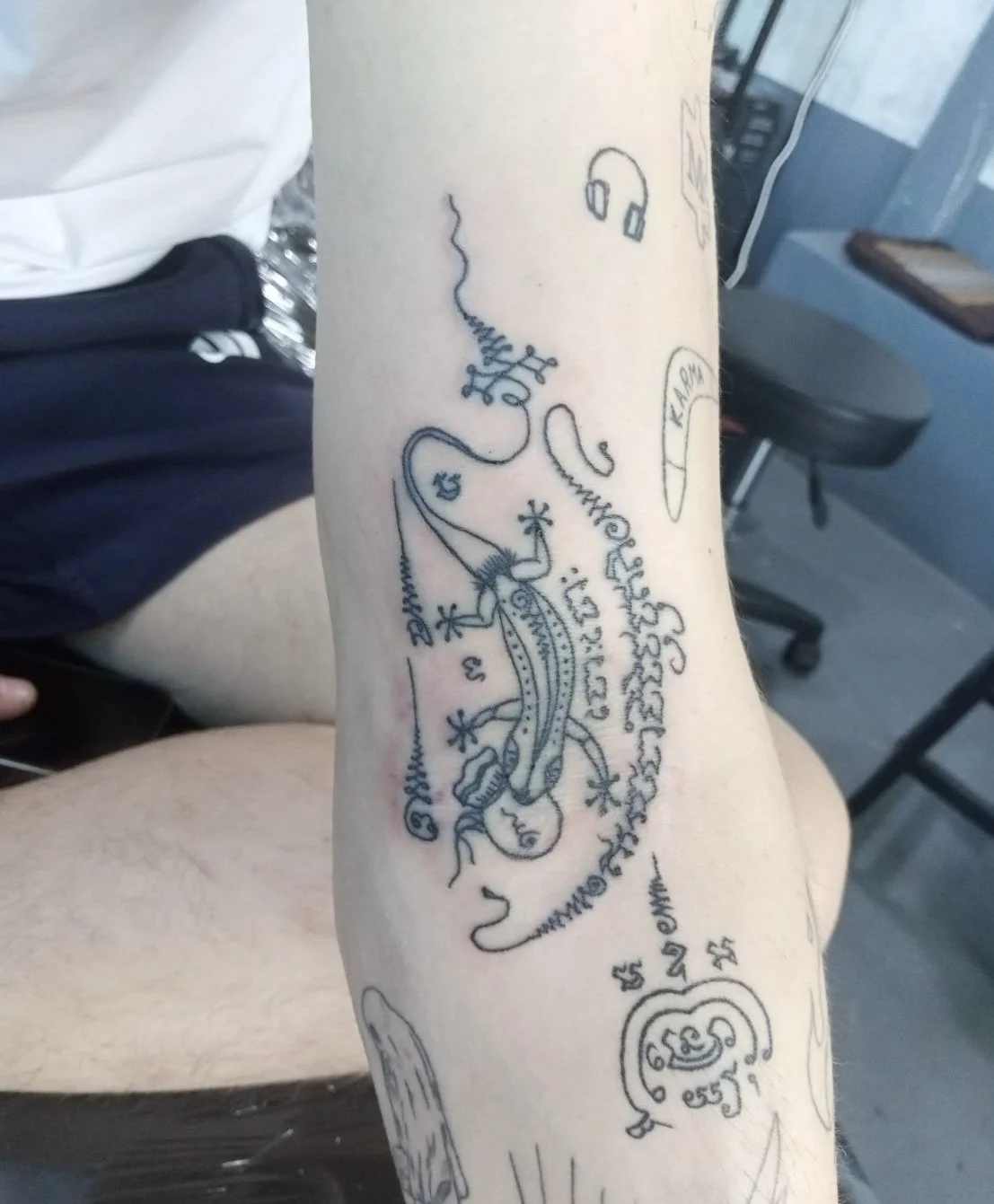
The Gecko Sak Yant, known in Thai as Yant Jingjok (ยันต์จิ้งจก), is a sacred Thai tattoo associated with awareness, adaptability, and quiet protection. In Thai culture, the gecko is respected for its ability to sense danger early, move silently, and survive in constantly changing environments.
Rather than representing aggression or direct confrontation, the Gecko Sak Yant symbolizes alertness, intuition, and strategic survival. It is believed to help the wearer recognize hidden threats, avoid betrayal, and navigate challenges with intelligence rather than force. This Sak Yant suits those who rely on awareness, timing, and subtlety to succeed.
Unlike more dominant animal Sak Yants that emphasize power and authority, the Gecko Sak Yant reflects flexibility, charm, and resilience. It is traditionally associated with good fortune, smooth progress in life, and the ability to adapt without drawing unnecessary attention—moving through obstacles rather than colliding with them.
Meaning & Symbolism
The Gecko Sak Yant (Yant Jingjok) carries layered spiritual meanings deeply rooted in Thai belief and everyday symbolism:
• Awareness and vigilance – heightened alertness to subtle changes, hidden dangers, and unspoken intentions
• Protection from betrayal – guarding against people who act quietly or with hidden motives
• Adaptability and survival – the ability to adjust, endure, and thrive in changing or uncertain environments
• Charm and attraction – traditionally linked to personal appeal, smooth communication, and favorable outcomes
• Spiritual perception – sensing unseen forces, negative energy, or harmful intentions before they manifest
Rather than raw power or dominance, the Gecko Sak Yant emphasizes intelligence, timing, and quiet resilience, making it a deeply strategic and protective yantra.
Who This Sak Yant Is Traditionally For
The Gecko Sak Yant is traditionally chosen by individuals who rely on awareness, intuition, and adaptability rather than force or confrontation.
It is especially suited for:
• People navigating complex social or business environments
• Those who prefer to avoid conflict rather than meet it head-on
• Individuals who value intuition, timing, and observation
• People seeking protection from hidden enemies, gossip, or betrayal
• Those undergoing periods of change, transition, or uncertainty
In traditional belief, this Sak Yant supports those who move quietly through life, observe carefully, and succeed by understanding their surroundings rather than overpowering them.
Placement Rules & Body Areas
Unlike many geometric or script-based Sak Yants, animal yants such as the Gecko Sak Yant (Yant Jingjok) are not restricted to being placed above the waist. In traditional practice, animal yants are more flexible in placement because their power is symbolic and behavioral rather than hierarchical or monk-restricted.
The Gecko Sak Yant is traditionally positioned based on function and intention, not status.
Common and accepted placements include:
• Upper or mid back – representing awareness of one’s surroundings and protection from unseen influences
• Shoulder blade – linked to vigilance, alertness, and watchfulness
• Side torso / ribs – associated with adaptability and movement
• Arms or legs – reflecting mobility, survival, and the ability to navigate changing situations
For animal yants, placement is chosen to support the nature of the animal, not to follow strict vertical rules. The gecko’s symbolism—alertness, adaptability, and quiet protection—allows for broader placement without diminishing meaning.
Bamboo vs Machine Application
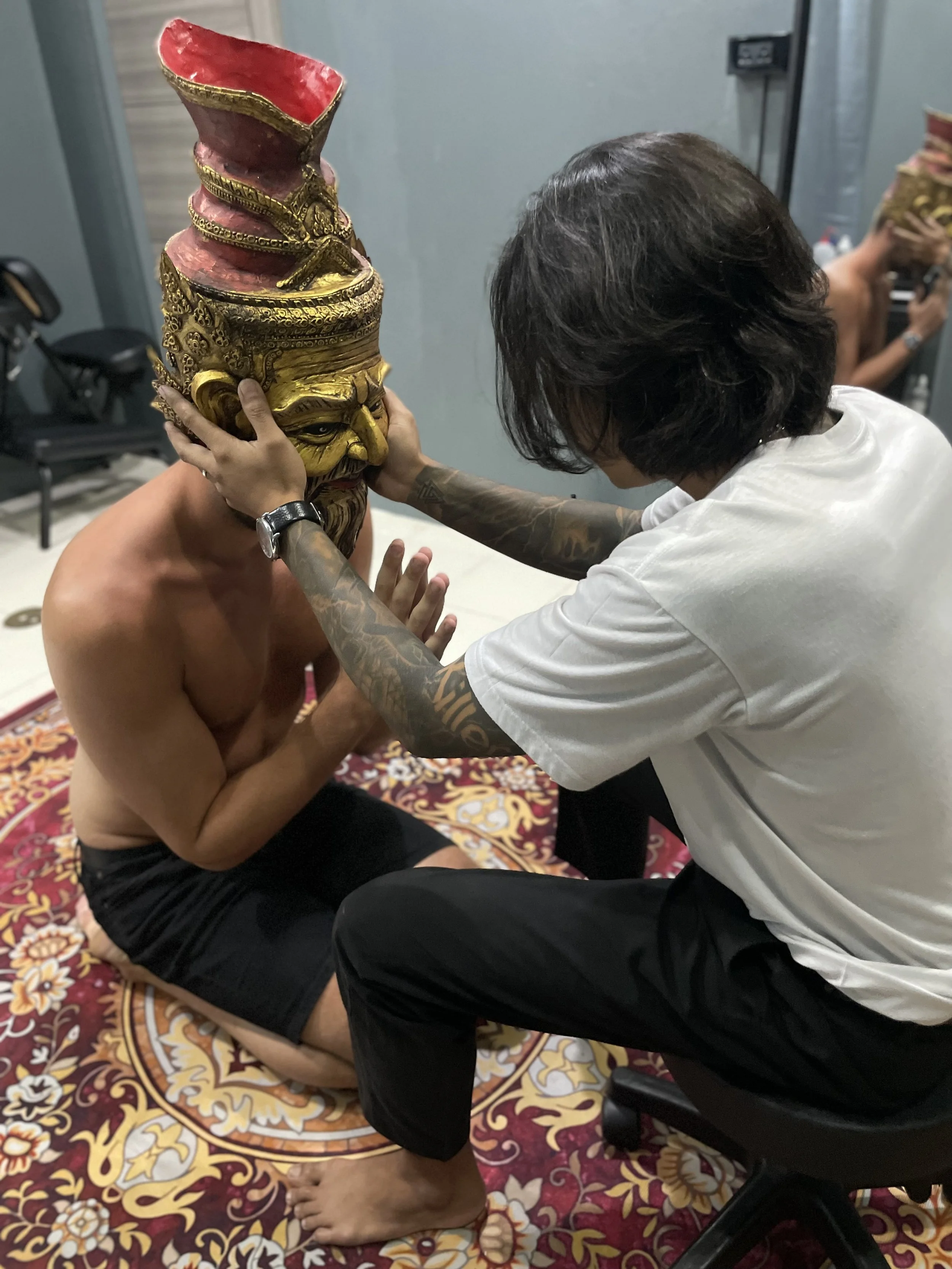
Traditionally, the Gecko Sak Yant (Yant Jingjok) is applied using the bamboo (poke-and-stick) method, a technique that has been used for centuries in Sak Yant practice. When performed by an Ajarn, the bamboo method is often accompanied by chanting (khatha) and intention-setting, forming part of a ritual process rather than just a tattoo application.
In modern practice, machine tattooing is also commonly used for the Gecko Sak Yant. The symbolism and meaning of the yant remain the same, and the choice of method is usually based on design detail, placement, healing considerations, and client preference. The application method is typically discussed in advance to ensure it aligns with the wearer’s intentions.
Bamboo Method
• Hand-tapped using a traditional bamboo rod
• Slower, highly controlled application
• Commonly associated with ritual, chanting, and intention
• Favored by those seeking a more traditional Sak Yant experience
• Heals cleanly with proper aftercare
Machine Method
• Applied using modern tattoo equipment
• Allows for precise line control and consistency
• Often preferred for comfort or detailed designs
• Faster application and predictable healing
• Suitable for clients who value symbolism without ritual emphasis
Cultural & Spiritual Notes
Sak Yant is closely connected to Thai cultural and spiritual traditions. Traditionally, it is viewed not simply as a tattoo, but as a symbol of personal awareness, discipline, and intention.
With animal yants such as the Gecko Sak Yant (Yant Jingjok), the focus is less on strict moral codes and more on mindset and behaviour. The gecko represents alertness, adaptability, and careful observation, and wearers are traditionally encouraged to embody these qualities in daily life.
Some commonly observed traditions include:
• Receiving a blessing or activation, particularly when applied by an Ajarn
• Maintaining personal awareness and responsibility rather than relying on the tattoo alone
• Treating the Sak Yant with respect, understanding its meaning beyond decoration
Different Ajarns and lineages may place emphasis on different practices. For this reason, guidance and explanation are considered more important than rigid rules.

Is This Sak Yant Right for You?
The Gecko Sak Yant (Yant Jingjok) is well suited for individuals who value awareness, adaptability, and subtle protection rather than overt power or aggression.
It is often chosen by people who:
• Navigate complex social, work, or business environments
• Prefer to observe and adapt rather than confront directly
• Value timing, intuition, and situational awareness
• Are going through periods of change, transition, or uncertainty
• Want symbolism linked to survival, flexibility, and quiet confidence
Unlike more dominant animal Sak Yants, the Gecko Sak Yant reflects success through intelligence and awareness, not force. Its meaning aligns best with those who move carefully, read situations well, and act with intention.
If you are considering a Gecko Sak Yant tattoo in Phuket, a consultation is recommended to discuss design style, placement, and application method so the tattoo aligns with your intentions and lifestyle before proceeding.
Ghecko Sak Yant FAQ
-
Yes. The Gecko Sak Yant is suitable for both men and women. Animal yants are not gender-restricted, and the gecko’s symbolism—awareness, adaptability, and intuition—is traditionally considered neutral and universal.
-
Yes. Unlike some script-based or monk-restricted Sak Yants, animal yants such as the Gecko Sak Yant do not have strict placement rules. Placement is usually chosen based on design, comfort, and personal intention rather than hierarchy.
-
A blessing or activation is traditionally part of Sak Yant practice when applied by an Ajarn, but it is not mandatory for the tattoo to carry symbolic meaning. Many people choose the Gecko Sak Yant for its cultural and personal significance regardless of ritual.
-
Neither method is inherently “better.”
• Bamboo application is traditional and often chosen for ritual or cultural reasons.
• Machine application offers precision, comfort, and predictable healing.
The meaning of the Gecko Sak Yant remains the same with either method.
-
This depends on the size, detail, and application method. Most Gecko Sak Yants take between 30 minutes and 2 hours, with bamboo sessions sometimes taking longer due to the hand-tapped process.
-
Yes, but in a subtle way. The Gecko Sak Yant is associated with awareness, intuition, adaptability, and avoiding danger rather than confrontation or aggression.
