
Gao Yord Sak Yant Meaning & Symbolism | Phuket
The Gao Yord Sak Yant, known in Thai as Yant Gao Yord (ยันต์เก้ายอด), is regarded as one of the most sacred and powerful Sak Yant designs. It is traditionally associated with spiritual authority, protection, balance, and elevated status. In Thai belief, Gao Yord represents the pinnacle of sacred Yantra power and is often placed at the highest point of the back or body to symbolize spiritual ascent and dominance.
Rather than symbolizing aggression or physical force, the Gao Yord Sak Yant represents moral strength, discipline, and righteous authority. It is believed to help the wearer maintain clarity of mind, resist negative influences, and walk a path aligned with honour and correct conduct. The design reflects leadership guided by wisdom rather than ego, and power tempered by spiritual responsibility.
Unlike Sak Yants that focus on a single attribute, Gao Yord is considered a master Yant, combining multiple blessings into one central symbol. It is traditionally associated with protection from harm, enhancement of reputation, success in life and career, and the ability to command respect without intimidation. It is often chosen by those who carry responsibility, leadership roles, or who seek spiritual grounding and balance.
Spiritually, the Gao Yord Sak Yant is believed to act as a shield against danger, misfortune, and negative energy, while also strengthening confidence, inner stability, and personal discipline. It is said to help the wearer remain composed during difficult situations, act decisively when required, and maintain integrity through life’s challenges.
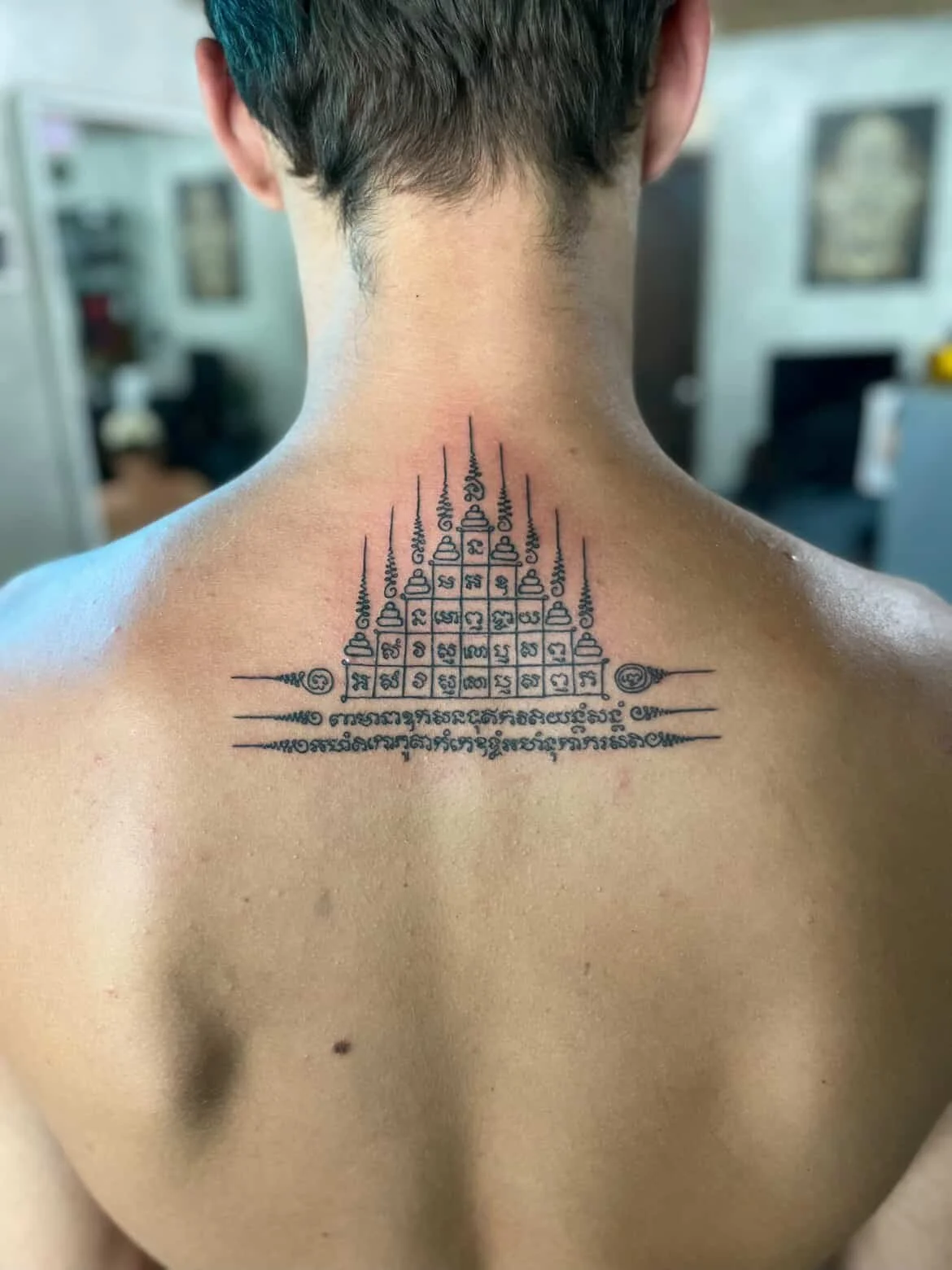
Meaning & Symbolism
Common symbolic meanings include:
• Spiritual authority and protection – regarded as a supreme Yantra that offers layered protection from harm, misfortune, and negative influences, while strengthening moral authority and personal integrity.
• Clarity and vigilance – heightened awareness of one’s surroundings, intentions of others, and spiritual obstacles, helping the wearer remain mindful and alert without paranoia or fear.
• Protection from betrayal and ill intent – traditionally believed to guard against deception, jealousy, and hidden enemies, reinforcing trust in one’s judgement and decisions.
• Endurance and inner resilience – the strength to withstand hardship, pressure, and life challenges while remaining composed, focused, and spiritually balanced.
• Controlled power and righteous dominance – authority expressed through calm confidence, discipline, and ethical conduct rather than aggression or intimidation.
• Fearlessness and courage – emotional and mental strength to face adversity, responsibility, and difficult situations with steadiness and resolve.
• Spiritual grounding and stability – inner balance and protection that help the wearer remain centred, disciplined, and aligned during turbulent or uncertain periods.
Rather than emphasizing physical force or confrontation, the Gao Yord Sak Yant represents elevated spiritual power and rightful authority. It is considered a master Yantra that unifies protection, discipline, wisdom, and status, making it especially suitable for those who carry responsibility, leadership roles, or who seek long-term spiritual stability and respect.
Who This Sak Yant Is Traditionally For
The Gao Yord Sak Yant (ยันต์เก้ายอด) is traditionally chosen by individuals who seek spiritual authority, protection, and elevated status, rather than physical dominance or confrontation. It represents strength through discipline, wisdom, and moral leadership.
It is especially suited for:
• People in leadership or protective roles who must command respect, responsibility, and authority through presence rather than force
• Those entrusted with responsibility over others, including business owners, teachers, mentors, and community leaders
• Individuals who must remain calm and composed under pressure, emotionally, mentally, or spiritually
• People seeking protection from negative influences, jealousy, ill intent, or unseen obstacles
• Those who value discipline, patience, and ethical conduct over impulsiveness or aggression
• Individuals going through periods that require endurance, balance, and spiritual grounding
Rather than emphasizing confrontation or physical power, the Gao Yord Sak Yant is for those who lead with integrity and stability, embodying quiet authority, spiritual maturity, and unwavering presence in challenging situations.
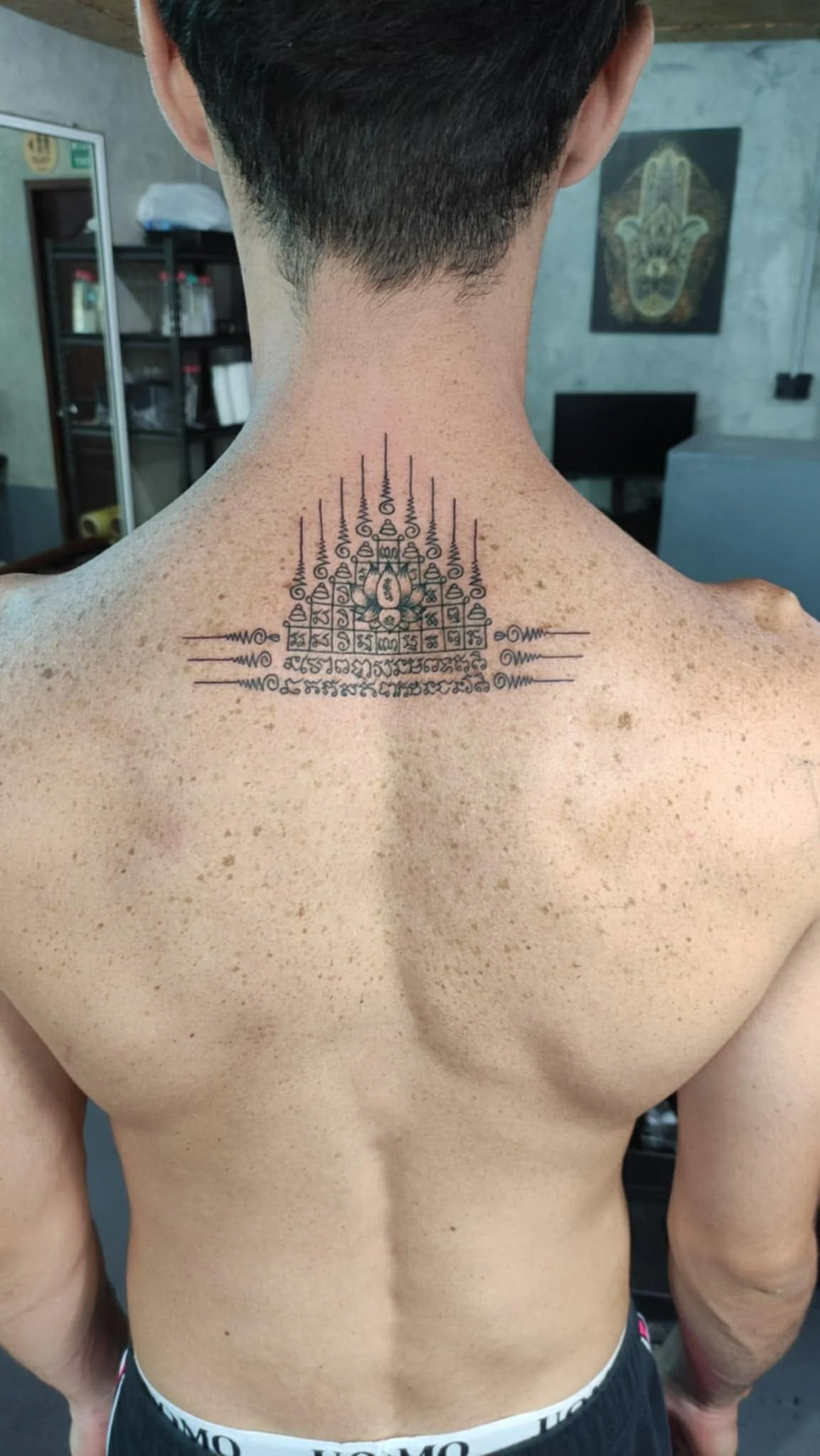
Placement Rules & Body Areas
Unlike animal Sak Yants, the Gao Yord Sak Yant (ยันต์เก้ายอด) is a sacred geometric Yantra and is traditionally placed according to spiritual hierarchy, protection, and authority, rather than physical strength or territorial symbolism.
In traditional practice, Yantra-based Sak Yants such as Gao Yord are placed higher on the body, reflecting their role as a supreme protective and guiding symbol. Placement is chosen based on spiritual intent, balance, and respect for the Yantra’s elevated status.
The Gao Yord Sak Yant is traditionally positioned where it can act as a central source of protection and spiritual authority, rather than speed, aggression, or concealment.
Common and Accepted Placements Include:
• Upper back (between the shoulder blades) – the most traditional placement, symbolizing supreme protection, spiritual authority, and balance over the entire body
• Upper back, high near the neck – representing elevated status, leadership, and the Yantra’s role as a guardian overseeing the wearer’s path
• Center of the back – associated with stability, endurance, and long-term spiritual grounding
Less Common but Acceptable Placements:
• Upper arm or shoulder – sometimes chosen to emphasize authority, responsibility, and decisive action guided by discipline
• Upper chest (with Ajarn guidance) – representing inner strength, moral authority, and protection of the heart and spirit
The Gao Yord Sak Yant is rarely placed on lower areas of the body, as its energy represents higher spiritual authority, discipline, and divine protection rather than physical force or instinctive power.
As with all traditional Sak Yants, final placement is ideally guided by an Ajarn, who considers the wearer’s intention, personal circumstances, and spiritual balance to ensure the Yantra is placed respectfully and correctly.
Bamboo vs Machine Application
Traditionally, the Gao Yord Sak Yant (ยันต์เก้ายอด) is applied using the bamboo hand-tapped method, a technique that has been used for centuries in Sak Yant practice. When performed by an Ajarn, the bamboo method is commonly accompanied by chanting (khata), intention-setting, and ritual focus, making the application part of a spiritual process rather than simply a tattoo.
The bamboo method aligns closely with the symbolism of Gao Yord as a supreme Yantra of protection and authority. Each strike is deliberate and controlled, reflecting discipline, patience, and spiritual precision. For many, this method reinforces the traditional belief that the Yantra’s power is activated through ritual, lineage, and correct transmission.
In modern practice, machine tattooing is also used for the Gao Yord Sak Yant, particularly when guided by an Ajarn or knowledgeable practitioner. While the visual form and spiritual meaning of the Yantra remain unchanged, the choice of application method is usually based on design clarity, placement, healing considerations, and the wearer’s personal circumstances. When properly blessed, the spiritual intent of the Gao Yord Sak Yant can be established regardless of the application method.
Ultimately, the method of application is discussed in advance to ensure it aligns with the wearer’s intentions, comfort level, and long-term outcome, while still respecting traditional principles and hierarchy.
Bamboo Method
• Hand-tapped using a traditional bamboo rod
• Slower, highly controlled application
• Commonly associated with ritual, chanting, and spiritual transmission
• Favoured by those seeking a traditional Sak Yant experience
• Heals cleanly with proper aftercare
Machine Method
• Applied using modern tattoo equipment
• Allows for precise line control and consistency
• Often preferred for comfort or highly detailed Yantra work
• Faster application with predictable healing
• Suitable for clients who value symbolism with less ritual emphasis
Cultural & Spiritual Notes
The Gao Yord Sak Yant (ยันต์เก้ายอด) holds a central place in Thai spiritual and Sak Yant tradition. It is widely regarded not merely as a tattoo, but as a supreme protective Yantra representing spiritual authority, moral discipline, and alignment with higher principles.
Traditionally, Gao Yord is associated with elevated status and guardianship, symbolizing the presence of multiple protective forces unified into a single master Yantra. It is often understood as the foundation upon which other Sak Yants draw strength, which is why it is commonly placed at the highest point of the body.
In Thai belief, the power of Gao Yord is not rooted in aggression or physical dominance, but in ethical conduct, restraint, and clarity of intention. Wearers are traditionally encouraged to live in a way that reflects discipline, respect, and responsibility, as the Yantra is believed to function best when the wearer’s actions align with its principles.
Some commonly observed traditions include:
• Receiving a blessing or activation, particularly when the Sak Yant is applied or consecrated by an Ajarn
• Maintaining discipline and moral conduct, as misuse of power or unethical behaviour is believed to weaken the Yantra’s influence
• Treating the Sak Yant with respect, recognising it as a sacred symbol rather than purely decorative art
• Living with awareness and self-control, reflecting Gao Yord’s role as a guide toward balance, wisdom, and spiritual stability
Traditionally, Sak Yants are believed to work in harmony with the wearer’s behaviour rather than independently of it. For Gao Yord, this means acting with integrity, exercising authority responsibly, and remaining grounded during times of challenge or success.
Different Ajarns and lineages may place emphasis on slightly different practices or interpretations. For this reason, guidance from an Ajarn is considered more important than rigid rules, ensuring the Yantra is respected, understood, and applied correctly for each individual.
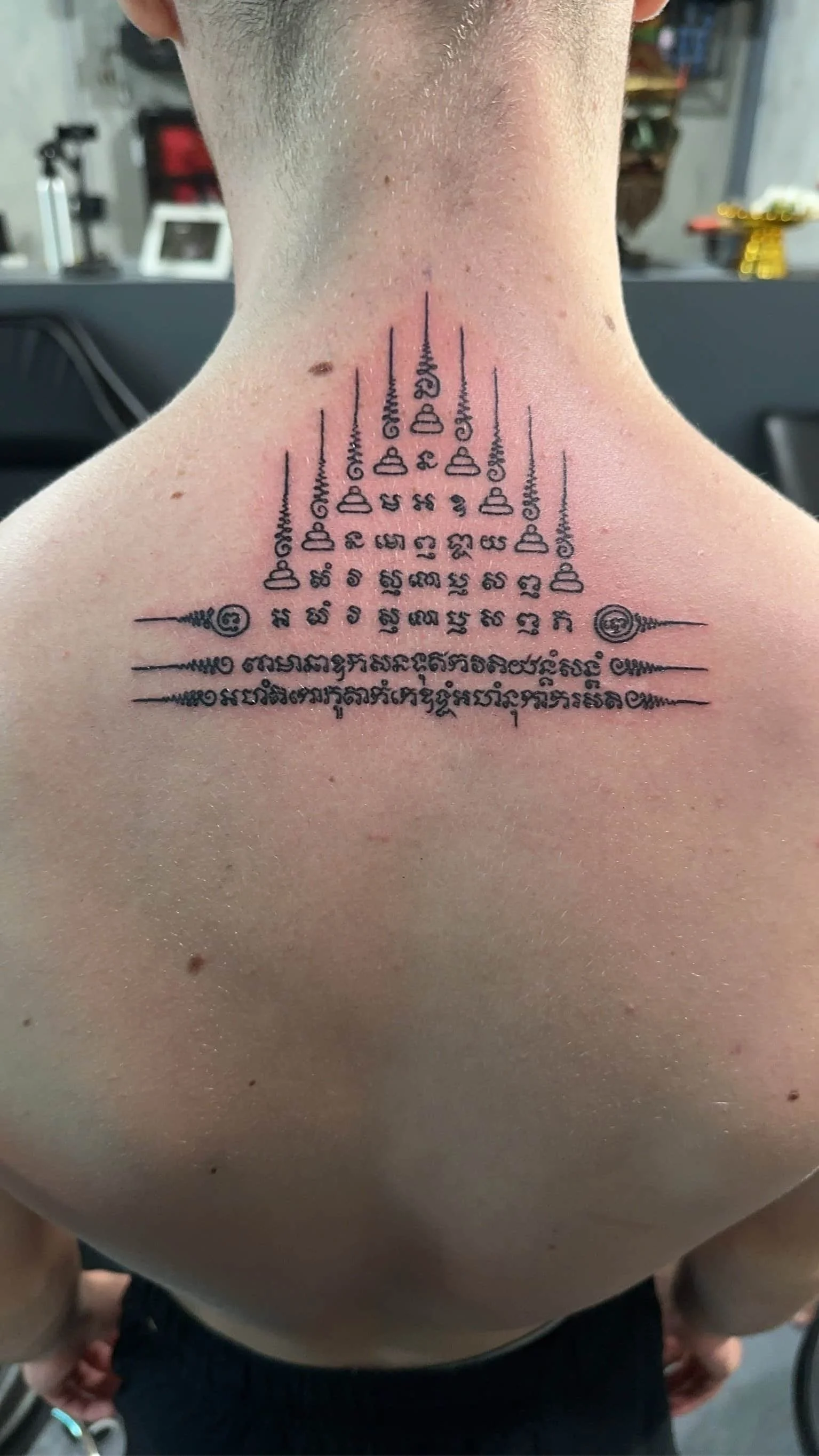
Is This Sak Yant Right for You?
The Gao Yord Sak Yant (ยันต์เก้ายอด) is well suited for individuals who value discipline, responsibility, spiritual authority, and long-term protection, rather than speed, adaptability, or physical confrontation. It represents stability, moral strength, and leadership guided by wisdom.
It is often chosen by people who:
• Operate in positions of responsibility or leadership, where calm authority and respect are essential
• Carry responsibility for others, such as business owners, mentors, teachers, or protectors
• Remain composed under pressure and act decisively when necessary
• Value discipline, patience, and ethical conduct over impulsive action
• Seek spiritual grounding and protection during demanding or transitional periods
• Are facing challenges that require endurance, balance, and inner stability
Unlike animal Sak Yants associated with speed, aggression, or instinct, Gao Yord is not about reacting quickly or forcefully. It is about maintaining position, exercising authority responsibly, and remaining aligned with higher principles, even during difficulty.
This Sak Yant is best suited for those who lead with integrity, understand the weight of responsibility, and seek a foundational Yantra that supports long-term stability, protection, and respect rather than short-term power.
If you are considering a Gao Yord Sak Yant tattoo in Phuket, a consultation is recommended to discuss placement, application method, and spiritual intent, ensuring the Yantra is applied respectfully and aligns with your lifestyle and goals before proceeding.
Gao Yord Sak Yant FAQ
-
Traditionally, Gao Yord is placed higher on the body, such as the upper back or shoulder area, to reflect its elevated spiritual status. While it is not an animal Yant, it is still considered a supreme Yantra and is rarely placed below the waist. Final placement should always be guided by an Ajarn to ensure respect and correctness.
-
Traditionally, Gao Yord is placed higher on the body, such as the upper back or shoulder area, to reflect its elevated spiritual status. While it is not an animal Yant, it is still considered a supreme Yantra and is rarely placed below the waist. Final placement should always be guided by an Ajarn to ensure respect and correctness.
-
n traditional practice, a blessing or activation by an Ajarn is considered important, as it connects the Yantra to lineage, intention, and spiritual transmission. While the design itself holds symbolic meaning, many believe the Yantra is most effective when properly consecrated.
-
Both methods are acceptable. Bamboo is traditionally preferred for those seeking a ritual-based Sak Yant experience, often involving chanting and spiritual focus. Machine application is also commonly used, especially for precision and comfort. When guided or blessed by an Ajarn, the spiritual intent of Gao Yord can be established using either method.
-
Application time varies depending on size, placement, and method. Smaller Gao Yord designs may take under an hour, while larger or more detailed pieces—especially when done traditionally—can take longer. Ritual elements may also extend the session. The Gao Yord can usuaully be completed in 1-2 hours.
-
Gao Yord is considered one of the most powerful protective Sak Yants. It is often described as a master Yantra, offering layered protection, spiritual authority, and balance. It is commonly chosen as a foundational Sak Yant or placed above other designs.
