
Lotus Flower Sak Yant (Dok Bua Nam Chok) Meaning
The Lotus Flower Sak Yant, known in Thai as Dok Bua (ดอกบัว), is a sacred design deeply rooted in Thai spiritual belief and Buddhist symbolism. It represents purity, spiritual awakening, balance, and inner growth. The lotus is revered for its ability to rise from muddy waters and bloom untainted, symbolizing the journey of the human spirit toward clarity, wisdom, and enlightenment despite life’s challenges.
Rather than representing material power or outward dominance, the Lotus Flower Sak Yant embodies inner strength, emotional balance, and moral clarity. It is believed to support mental calm, self-awareness, and resilience, helping the wearer remain centered and composed in times of difficulty. The lotus reflects a life guided by intention, patience, and spiritual discipline.
Unlike Sak Yants associated with force or protection alone, the Lotus Flower Sak Yant focuses on transformation and personal development. It is traditionally linked to spiritual protection through purity of mind, the release of negative thought patterns, and the cultivation of compassion and clarity. For this reason, it is often chosen by those seeking balance, healing, or a deeper spiritual connection.
Spiritually, the Lotus Flower Sak Yant is believed to shield the wearer from negative influences by strengthening inner peace, emotional stability, and mindfulness. It is said to encourage steady progress through life’s challenges, promote harmonious relationships, and support a path aligned with wisdom, integrity, and spiritual growth.
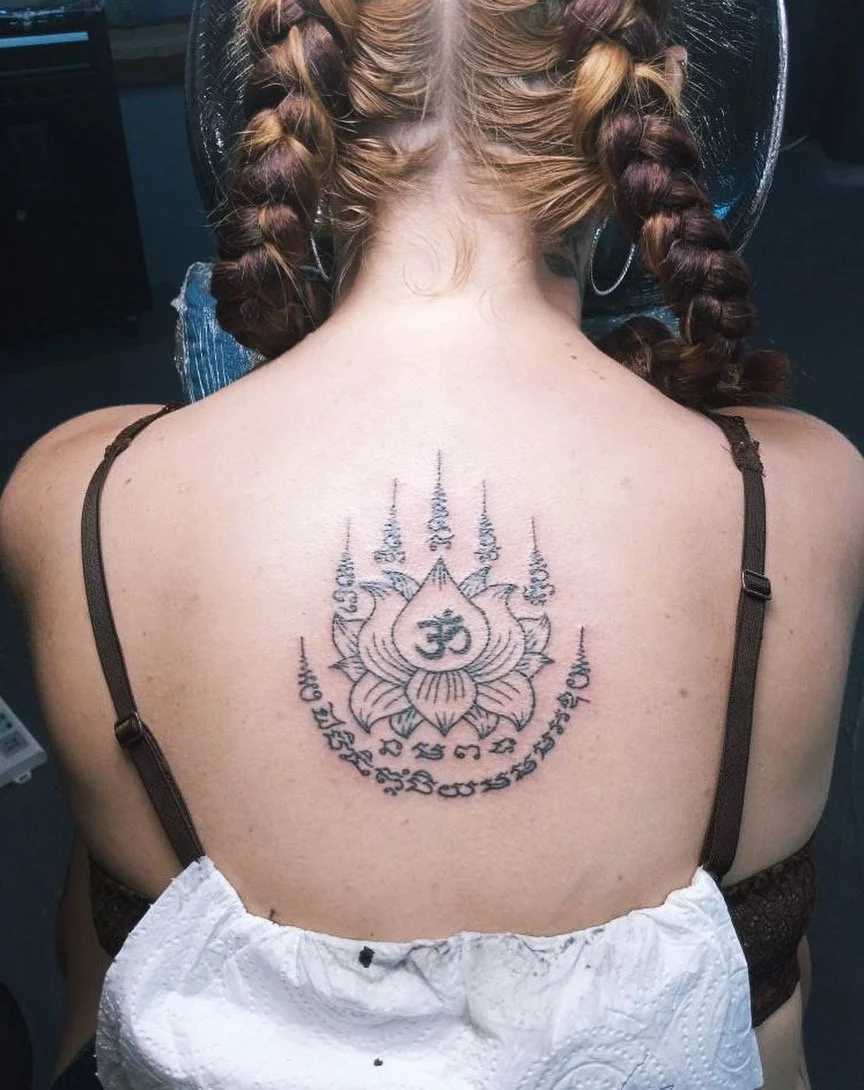
Meaning & Symbolism
The Lotus Flower Sak Yant (Dok Bua) carries deeply spiritual symbolism rooted in Thai and Buddhist belief. Common meanings associated with this Yant include:
• Purity of mind and spirit – the lotus rises untouched from muddy water, symbolizing moral clarity, clean intention, and spiritual purity despite external challenges or negative environments.
• Spiritual growth and awakening – represents the journey toward wisdom, enlightenment, and higher understanding through patience, discipline, and self-awareness.
• Emotional balance and inner peace – believed to support calmness, mental clarity, and emotional stability, helping the wearer remain centred during stressful or uncertain times.
• Resilience through adversity – the strength to endure hardship, pressure, and personal struggles while continuing to grow with grace and composure.
• Protection through purity – rather than forceful defence, the lotus is believed to shield the wearer by strengthening positive energy and reducing the influence of negativity or harmful intentions.
• Renewal and transformation – associated with rebirth, fresh beginnings, and the release of past burdens, allowing the wearer to move forward with clarity and purpose.
• Harmony and alignment – promotes balance between mind, body, and spirit, encouraging a life guided by mindfulness, integrity, and compassion.
Rather than symbolizing dominance, aggression, or confrontation, the Lotus Flower Sak Yant represents quiet strength and spiritual elevation. It is chosen by those seeking inner balance, healing, and long-term personal growth, offering protection through purity, awareness, and alignment with a righteous path.
Who This Sak Yant Is Traditionally For
The Lotus Flower Sak Yant (Dok Bua – ดอกบัว) is traditionally chosen by individuals who seek inner balance, spiritual growth, and clarity of mind, rather than authority, confrontation, or outward dominance. It represents strength through purity of intention, patience, and personal transformation.
This Sak Yant is especially suited for:
• Individuals seeking emotional balance and inner peace, particularly during stressful or uncertain periods in life
• Those focused on spiritual growth or healing, including mindfulness, meditation, or personal development
• People navigating change or new beginnings, who wish to release past burdens and move forward with clarity and purpose
• Individuals who value patience, compassion, and self-awareness over impulsiveness or conflict
• Those wishing to protect themselves from negativity by strengthening positive energy and mental resilience
• People seeking harmony between mind, body, and spirit, especially when feeling overwhelmed or ungrounded
Rather than symbolizing dominance or control, the Lotus Flower Sak Yant represents quiet strength and spiritual elevation. It is chosen by those who seek stability through awareness, protection through purity, and long-term growth guided by wisdom and inner balance.
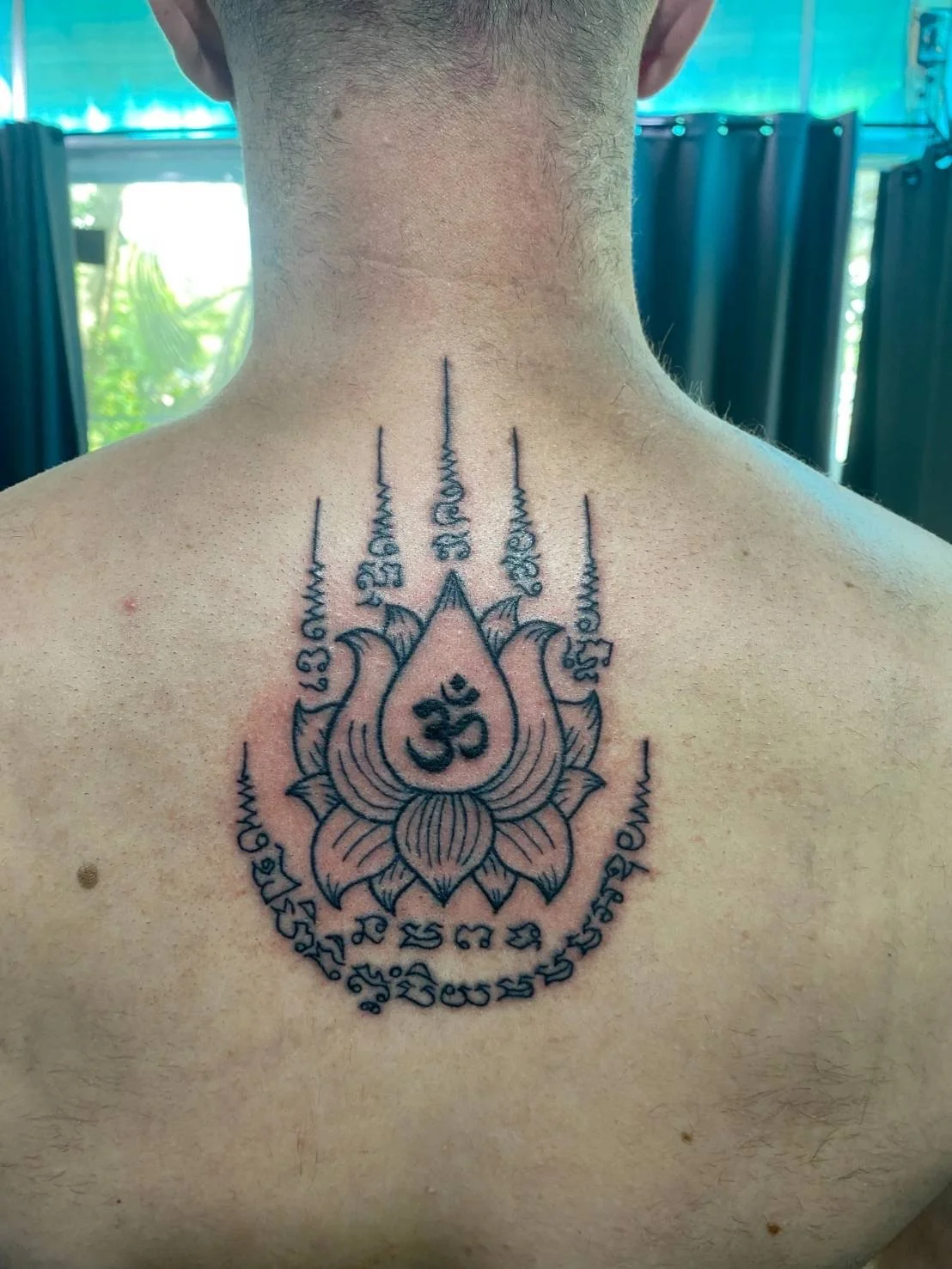
Placement Rules & Body Areas
Unlike animal Sak Yants, the Lotus Flower Sak Yant (Dok Bua – ดอกบัว) is a symbolic and spiritual design rooted in purity, balance, and inner growth rather than physical strength, dominance, or territorial meaning. Its placement is guided by intention, harmony, and personal spiritual focus.
In traditional practice, symbolic Sak Yants such as the Lotus are placed to support emotional balance, mindfulness, and spiritual development. Placement is chosen based on the wearer’s intention, personal journey, and the desire for calm, clarity, and inner stability.
The Lotus Flower Sak Yant is positioned where it can serve as a reminder of awareness, renewal, and spiritual alignment, encouraging steady growth rather than forceful action.
Common and accepted placements include:
• Upper back or between the shoulder blades – balance, spiritual awareness, and support through life’s challenges
• Center of the back – grounding, inner stability, and long-term emotional and spiritual balance
• Upper chest – purity of intention, protection of the heart, and alignment between mind and spirit
• Upper arm or shoulder – personal growth, self-discipline, and mindful action
Less common but acceptable placements:
• Side of the torso or ribs – transformation, reflection, and inner strength
• Back of the shoulder or scapula – calm presence and quiet resilience
The Lotus Flower Sak Yant is generally avoided on lower areas of the body in traditional practice, as its symbolism represents elevation of the mind and spirit rather than instinctive or physical energy.
As with all Sak Yants, final placement is ideally guided by an Ajarn, who considers the wearer’s intention, personal circumstances, and spiritual balance to ensure the design is placed respectfully and correctly.
Bamboo vs Machine Application
Traditionally, the Lotus Flower Sak Yant (Dok Bua – ดอกบัว) is often applied using the bamboo hand-tapped method, a technique that has been practiced for centuries within Sak Yant tradition. When performed by an Ajarn, the bamboo method is commonly accompanied by chanting (khata), intention-setting, and ritual focus, making the application a spiritual process rather than simply a tattoo.
The bamboo method aligns closely with the symbolism of the Lotus, reflecting patience, mindfulness, and purity of intention. Each hand-tapped movement is deliberate and measured, mirroring the steady growth and calm resilience represented by the lotus flower. For many, this traditional approach reinforces the belief that the Sak Yant’s spiritual energy is activated through correct ritual, lineage, and mindful transmission.
In modern practice, machine tattooing is also used for the Lotus Flower Sak Yant, particularly when guided by an Ajarn or experienced practitioner. While the visual design and spiritual meaning remain unchanged, the choice of application method is usually based on design detail, placement, healing considerations, and the wearer’s personal comfort. When properly blessed, the spiritual intent of the Lotus Flower Sak Yant can be established regardless of the method used.
Ultimately, the application method is discussed in advance to ensure it aligns with the wearer’s intentions, comfort level, and long-term outcome, while still respecting traditional Sak Yant principles.
Bamboo Method
• Hand-tapped using a traditional bamboo rod
• Slower, highly controlled application
• Commonly associated with ritual, chanting, and spiritual transmission
• Favoured by those seeking a traditional Sak Yant experience
• Heals cleanly with proper aftercare
Machine Method
• Applied using modern tattoo equipment
• Allows for precise line control and consistency
• Often preferred for comfort or highly detailed Yantra work
• Faster application with predictable healing
• Suitable for clients who value symbolism with less ritual emphasis
Cultural & Spiritual Notes
The Lotus Flower Sak Yant (Dok Bua – ดอกบัว) holds deep spiritual significance in Thai and Buddhist tradition. Rather than representing authority or protection through force, the lotus symbolizes purity of mind, spiritual awakening, balance, and the ability to rise above suffering and negative conditions.
Traditionally, the lotus is revered for emerging clean and untouched from muddy water, making it a powerful symbol of inner clarity, renewal, and moral integrity. In Sak Yant practice, the Lotus Flower is understood as a reminder of the wearer’s spiritual path, encouraging mindfulness, patience, and steady personal growth.
In Thai belief, the spiritual influence of the Lotus Flower Sak Yant is closely connected to intention and conduct. Its symbolism is believed to be strengthened through calm awareness, ethical behaviour, and alignment with positive values rather than through dominance or control. The lotus is associated with peace, compassion, and clarity, and wearers are traditionally encouraged to reflect these qualities in daily life.
Some commonly observed traditions include:
• Receiving a blessing or activation, particularly when the Sak Yant is applied or consecrated by an Ajarn
• Maintaining mindfulness and balanced conduct, as emotional instability or harmful intent is believed to disrupt inner harmony
• Treating the Sak Yant with respect, recognising it as a sacred symbol rather than purely decorative art
• Living with awareness, patience, and compassion, reflecting the lotus’s role as a symbol of spiritual elevation and inner peace
Traditionally, Sak Yants are believed to work in harmony with the wearer’s behaviour rather than independently of it. For the Lotus Flower Sak Yant, this means cultivating clarity of intention, emotional balance, and a commitment to personal and spiritual growth.
Different Ajarns and lineages may place emphasis on slightly different interpretations or practices. For this reason, guidance from an Ajarn is considered more important than rigid rules, ensuring the Lotus Flower Sak Yant is respected, understood, and aligned with the individual’s path.
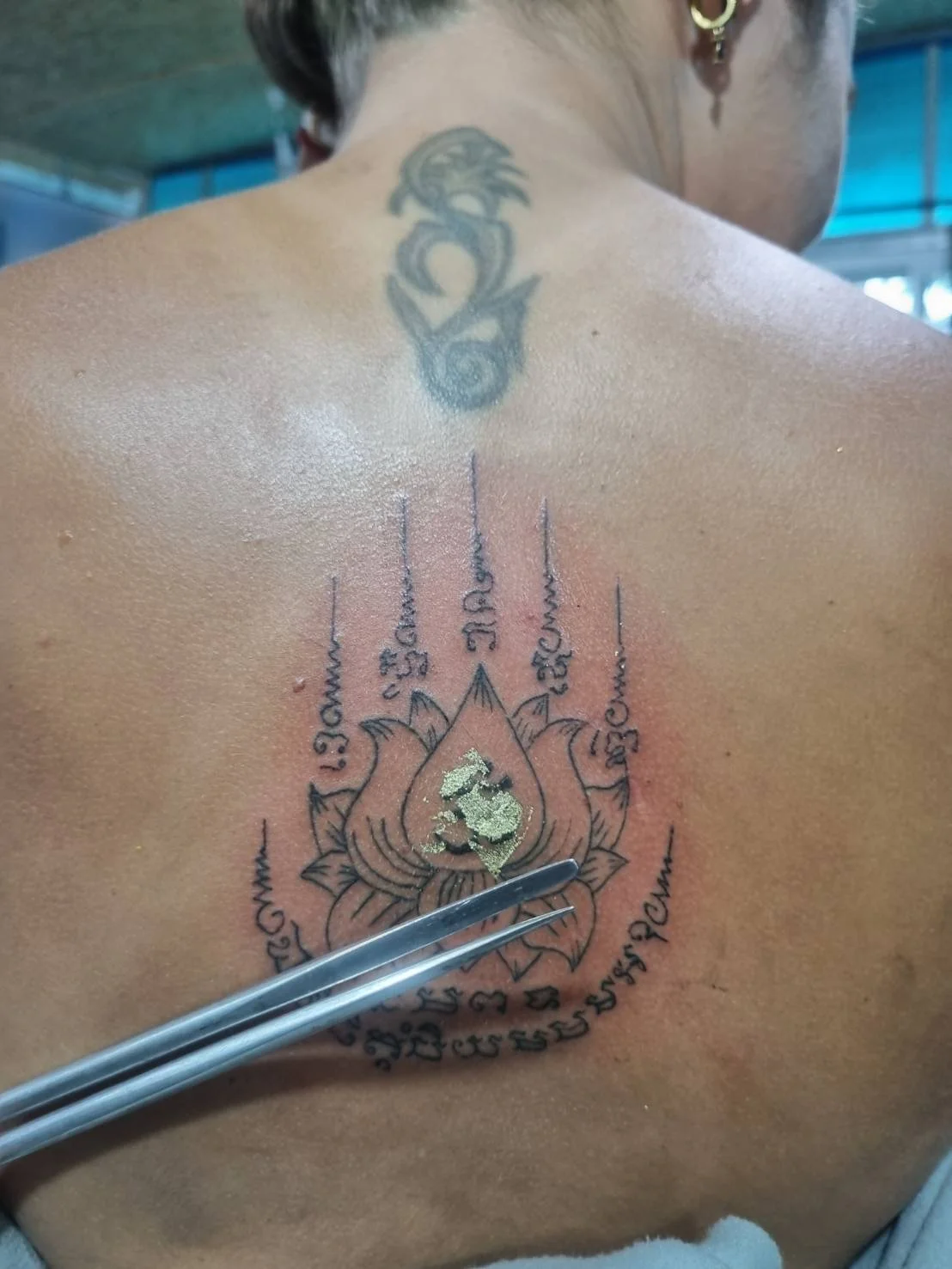
Is This Sak Yant right for You?
The Lotus Flower Sak Yant (Dok Bua – ดอกบัว) is well suited for individuals who seek inner balance, spiritual growth, and clarity of mind rather than authority, confrontation, or outward dominance. It represents calm strength, patience, and personal transformation guided by awareness and intention.
It is often chosen by people who:
• Seek emotional balance and inner peace, especially during stressful or uncertain periods
• Are focused on personal or spiritual growth, mindfulness, or healing
• Are going through change, renewal, or new beginnings
• Value patience, compassion, and self-awareness over impulsive or reactive behaviour
• Wish to protect themselves from negativity by strengthening inner clarity and resilience
• Desire harmony between mind, body, and spirit
Unlike animal Sak Yants associated with instinct, aggression, or speed, the Lotus Flower Sak Yant is not about reaction or force. It is about steady growth, inner clarity, and maintaining balance through life’s challenges.
This Sak Yant is best suited for those who value reflection, emotional stability, and long-term personal development. It supports a path guided by wisdom, calm intention, and spiritual alignment rather than external power.
If you are considering a Lotus Flower Sak Yant tattoo in Phuket, a consultation is recommended to discuss placement, application method, and intention, ensuring the design aligns with your personal journey and long-term goals before proceeding.
Lotus Flower Sak Yant FAQ
-
The Lotus Flower Sak Yant, known in Thai as Dok Bua (ดอกบัว), is a sacred design symbolizing purity, spiritual growth, balance, and inner awakening. It represents rising above hardship while remaining clear and mindful.
-
It represents purity of mind, emotional balance, renewal, patience, and personal transformation. The lotus is associated with spiritual clarity rather than protection through force.
-
Yes. The Lotus Flower Sak Yant is commonly chosen by women and men alike. Its symbolism of balance, healing, and inner growth makes it especially popular among women, and there are no traditional restrictions preventing women from receiving this Sak Yant.
-
In traditional practice, the Lotus Flower Sak Yant is generally placed above the waist. Because the lotus symbolizes spiritual elevation, clarity, and purity, lower-body placement is usually avoided out of respect for its meaning. Placement is best discussed with an Ajarn.
-
Application time depends on size, detail, and method. Most Lotus Flower Sak Yants take approximately 1 to 2.5 hours to apply, including preparation. Additional time may be required if a blessing or ritual is performed by an Ajarn.
-
Traditionally, Sak Yants are activated or blessed by an Ajarn through chanting and intention-setting. While not mandatory, this is recommended for those seeking a traditional spiritual experience.
-
The best placement depends on intention, balance, and personal circumstances. Common placements include the upper back, chest, or upper arm, ideally chosen in consultation with an experienced practitioner or Ajarn.
