
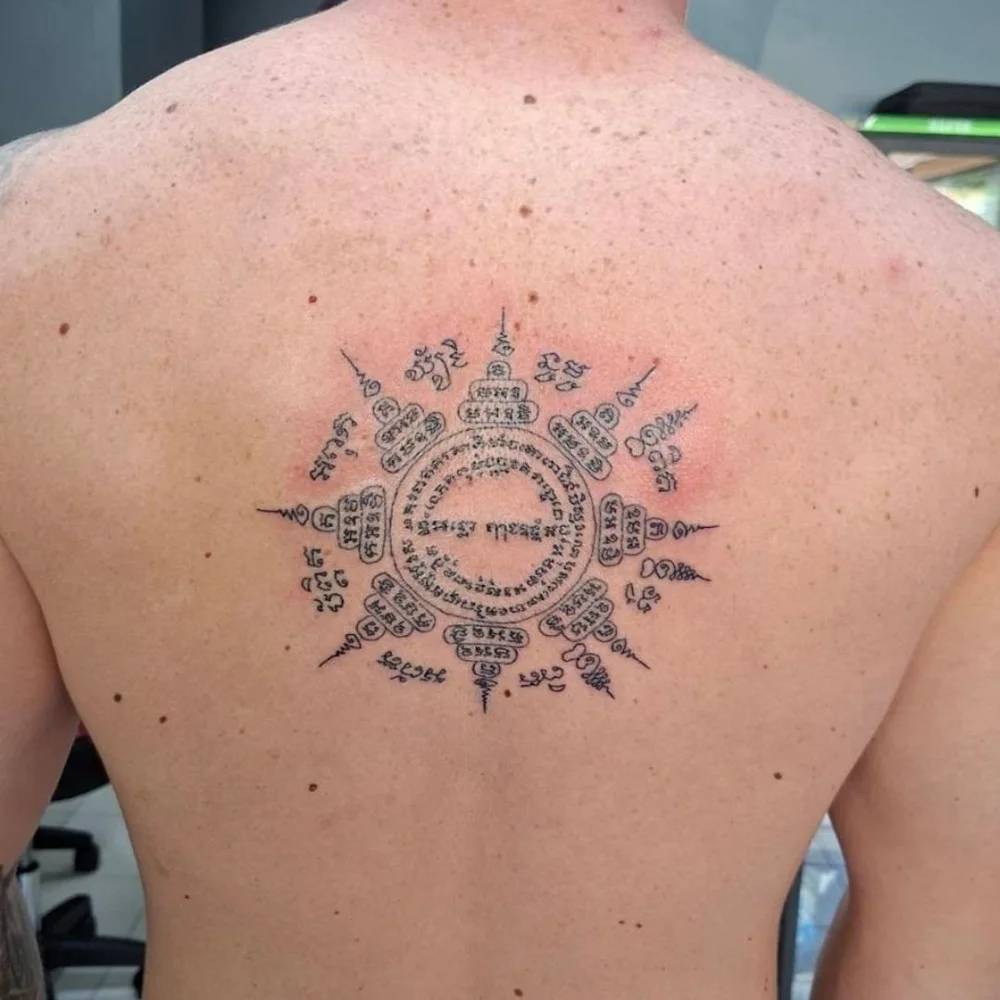
What Does the Paed Tidt Sak Yant Mean?
The Paed Tidt Sak Yant, also known as the Eight Directions or Compass Sak Yant, is a traditional Thai sacred tattoo associated with spiritual protection, guidance and balance.
Its symmetrical circular design represents the eight directions of the compass, symbolising protection wherever life's journey may lead.
Regarded as a Master Yant within the tradition practised at Fighters Ink, it is particularly popular among Muay Thai fighters, travellers and individuals seeking spiritual guidance during periods of change.
Protection in All Eight Directions
The Paed Tidt represents the cardinal and intercardinal directions, expressing the traditional belief that spiritual protection accompanies the wearer wherever they travel.
A Sacred Symbol for Every Journey
Unlike designs associated with a single spiritual intention, the Paed Tidt expresses the idea of protection extending in every direction.
Its eight points correspond to north, northeast, east, southeast, south, southwest, west and northwest. Sacred inscriptions accompany these directions within traditional versions of the yantra.
For many wearers, the compass serves as a personal reminder to remain grounded, mindful and courageous while navigating unfamiliar places and life's uncertainties.
The Spiritual Symbolism of Paed Tidt
The circular structure, sacred characters and outward facing points distinguish the Paed Tidt from other traditional Sak Yant designs.
The Sacred Circle
The circular geometry symbolises continuity, balance and unity. The wearer becomes the symbolic centre of a design that extends protection in every direction.
The Eight Directions
Eight outward-facing points represent the different directions of the compass, reflecting the belief that spiritual guidance is not limited to a particular place or destination.
Representations of the Buddha
In one traditional interpretation, the repeated geometric forms represent manifestations of the Buddha associated with the eight directions. Interpretations may differ between spiritual lineages.
Sacred Khom Inscriptions
Traditional Paed Tidt designs incorporate sacred characters and protective incantations. Their arrangement and spiritual interpretation depend on the teachings of the individual Sak Yant master.
Blessings and Spiritual Protection
The Eight Directions Sak Yant is associated with qualities that support the wearer through travel, personal challenges and important life transitions.
Universal Protection
Eight-Direction SafeguardingRepresents spiritual protection from dangers, negative influences and misfortune, regardless of the direction in which one travels.
Klaew Klaad
Safe PassageTraditionally associated with avoiding dangerous situations, accidents and unexpected difficulties throughout life's journey.
Metta
Loving-KindnessRepresents compassion, goodwill and positive relationships with the people encountered along the way.
Spiritual Guidance
Direction & ClaritySymbolises the ability to maintain a sense of purpose and make thoughtful decisions during periods of uncertainty.
Balance
Inner StabilityReflects the importance of remaining centred, composed and adaptable when facing changing circumstances and external pressures.
Courage
Strength Through AdversityRepresents confidence and determination when entering unfamiliar environments, facing challenges or beginning a new chapter in life.
The spiritual meanings and associated blessings may vary between Sak Yant masters. These interpretations reflect traditional beliefs rather than guarantees of physical safety or good fortune.
Where Should the Paed Tidt Sak Yant Be Placed?
Placement is an important consideration when receiving a traditional Master Yant, both for its visual symmetry and cultural significance.
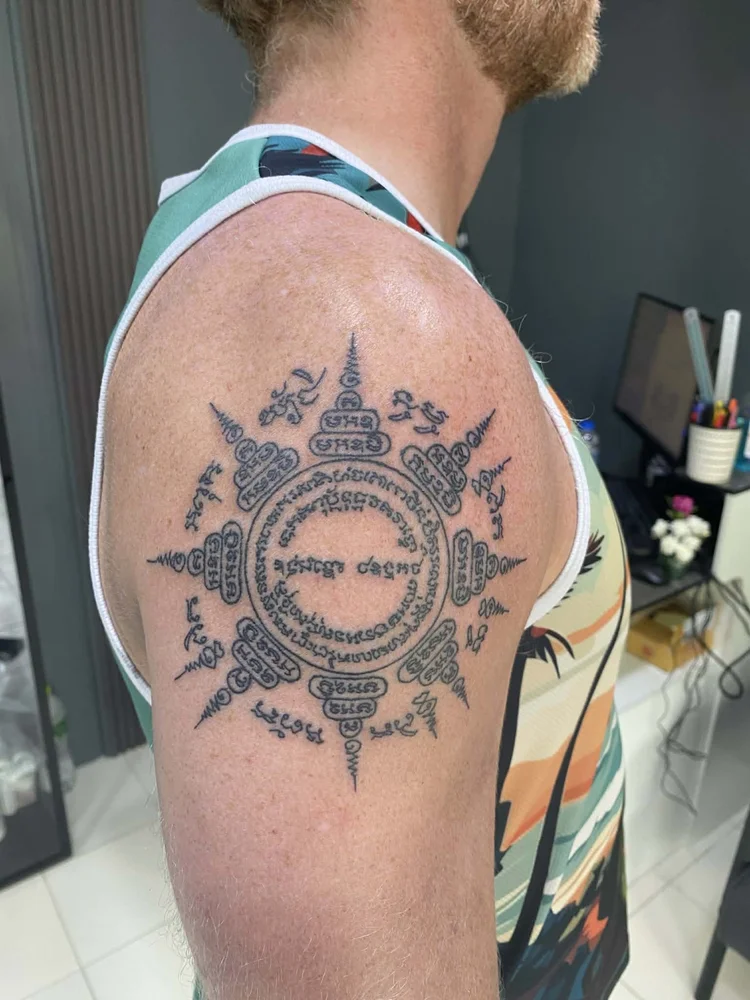
Central Upper Back
The most traditional and popular placement at Fighters Ink. Positioning the circular yantra between the shoulder blades creates a balanced composition and reflects its symbolism as a spiritual compass.
Chest
An alternative upper-body placement that allows the sacred design to remain prominent while respecting traditional placement customs.
Shoulder or Upper Arm
Depending on the design and the master's guidance, the shoulder or upper arm may also accommodate the Eight Directions Sak Yant.
Above the Waist
Within the tradition practised at Fighters Ink, Master Yants such as the Paed Tidt are placed above the waist as a sign of respect for their sacred Buddhist significance.
Why Is Paed Tidt Considered a Master Yant?
Within many Sak Yant traditions, foundational yantras are chosen for their broad spiritual significance. The Paed Tidt is regarded at Fighters Ink as one of these important Master Yants.
Its emphasis on protection and guidance makes it a meaningful choice for those receiving their first traditional Thai sacred tattoo.
It can also complement existing Sak Yant tattoos, particularly the Gao Yord, creating a composition that brings together different aspects of spiritual protection and Buddhist symbolism.
Combining Paed Tidt with Other Sak Yant
Many wearers choose to combine complementary sacred designs to express different spiritual intentions and create a meaningful tattoo composition.
Traditional Paed Tidt Sak Yant Rules
Receiving a traditional Sak Yant involves more than choosing a tattoo design. It also carries expectations of respect, mindfulness and ethical conduct.
Respect Sacred Placement
Follow your master's guidance regarding upper-body placement and the relationship between the Paed Tidt and any existing sacred tattoos.
Practise Ethical Conduct
Many Sak Yant traditions encourage principles inspired by the Buddhist Five Precepts, including honesty, compassion and avoiding deliberate harm to others.
Respect Your Teacher
Honour the guidance of the Ajarn who performs the tattoo and respect the teachings associated with their spiritual lineage.
Observe the Blessing Ceremony
Traditional Sak Yant may include a blessing ceremony in which sacred chants are recited by the master. Participate respectfully and follow the instructions provided.
Follow Proper Tattoo Aftercare
Keep your new tattoo clean, follow professional aftercare instructions and avoid swimming, soaking or contact training until the skin has fully healed.
Traditional Sak Yant rules differ between temples, masters and spiritual lineages. Consult your Ajarn for the specific customs associated with your tattoo.
Paed Tidt Sak Yant FAQ
What does the Paed Tidt Sak Yant mean?
Paed Tidt translates to Eight Directions. The sacred design represents spiritual protection, guidance and balance throughout life's journey. Its circular geometry corresponds to the eight directions of the compass.
Why is Paed Tidt popular among Muay Thai fighters?
Muay Thai fighters often appreciate the design for its associations with courage, composure and spiritual protection when facing challenges, both inside and outside the ring.
Is Paed Tidt a good Sak Yant for travellers?
Yes. Its traditional association with protection in every direction makes it particularly meaningful for travellers and those exploring unfamiliar places or beginning new chapters in life.
Can women receive the Paed Tidt Sak Yant?
Yes. Fighters Ink welcomes clients regardless of gender. While some traditional temples follow specific customs, the team can explain the appropriate procedures for your session.
Can I combine Paed Tidt with Gao Yord?
Yes. A common composition positions the Gao Yord near the base of the neck and the Paed Tidt centrally beneath it. Your Sak Yant master can recommend suitable spacing and placement.
Can the Paed Tidt be tattooed below the waist?
Fighters Ink follows the traditional practice of placing this Master Yant above the waist to respect its sacred status and Buddhist symbolism.
What happens during a traditional Sak Yant blessing?
A Sak Yant master may recite sacred chants and perform a blessing ritual associated with their lineage. At Fighters Ink, traditional blessings are performed within a dedicated ceremonial space.
Where can I get a traditional Paed Tidt Sak Yant in Phuket?
Fighters Ink offers traditional Sak Yant tattoo consultations in Phuket, where you can discuss the Eight Directions design, placement, application technique and spiritual significance before receiving your tattoo.
Is the Paed Tidt Sak Yant Right for You?
The Paed Tidt is particularly meaningful for travellers, Muay Thai fighters, entrepreneurs and individuals navigating important changes in their lives.
Its eight-direction symbolism represents more than protection during physical travel. It also serves as a reminder to remain grounded, resilient and mindful wherever life's journey may lead.
If you are considering a traditional Paed Tidt Sak Yant in Phuket, speak with the team at Fighters Ink to explore its meaning, suitable placement and the traditions behind this sacred design.